
Table of Contents
how Amla for Hair Growth?
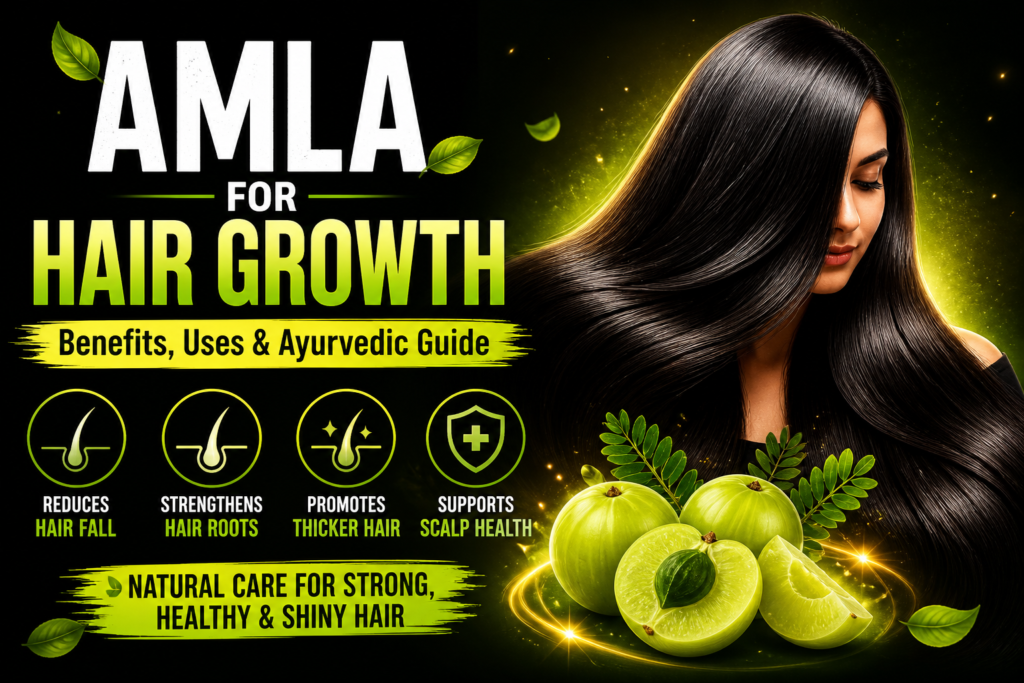
Amla, also known as Indian Gooseberry, has been used in Ayurvedic medicine for thousands of years. When it comes to hair care, amla is one of the most powerful natural ingredients you can use.
It is packed with Vitamin C, antioxidants, and essential fatty acids that work together to promote healthy, strong, and long hair.
What Is Amla ?
Amla is a small, green fruit native to India. It is a cornerstone of Ayurvedic medicine and has been used for centuries to treat hair loss, scalp issues, and premature greying.
Key nutrients found in amla:
- Vitamin C (20x more than an orange)
- Tannins and polyphenols
- Iron and calcium
- Essential fatty acids
Can amla Regrow hairs?
Amla does not regrow hair on completely bald areas, but it may support healthier hair growth by nourishing the scalp, strengthening hair follicles, and reducing breakage. amla can help to reduce the hairfall.
Rich in vitamin C and antioxidants, amla can help improve scalp health, which may encourage thicker, stronger hair when used regularly as part of a balanced hair care routine.
So, if you asking, does amla helps in hair growth. so, the answer is YES. but its cannot regrow hairs on bald area, it can support to improve your remain hairs health. for regrow your hairs read here – How to Regrow Hair Naturally.
Why Amla Is Good for Hair Growth
Amla works on hair growth in multiple ways. It does not just grow your hair — it strengthens the entire hair growth cycle from root to tip.
- Stimulates hair follicles — Amla improves blood circulation to the scalp, which activates dormant hair follicles.
- Blocks DHT — DHT is the hormone responsible for hair loss. Amla naturally inhibits the enzyme that converts testosterone into DHT.
- Boosts collagen production — Vitamin C in amla helps produce collagen, which strengthens hair strands.
- Fights free radicals — Antioxidants in amla protect hair follicles from oxidative stress and damage.
Key Benefits of Amla for Hair
1. Promotes Faster Hair Growth
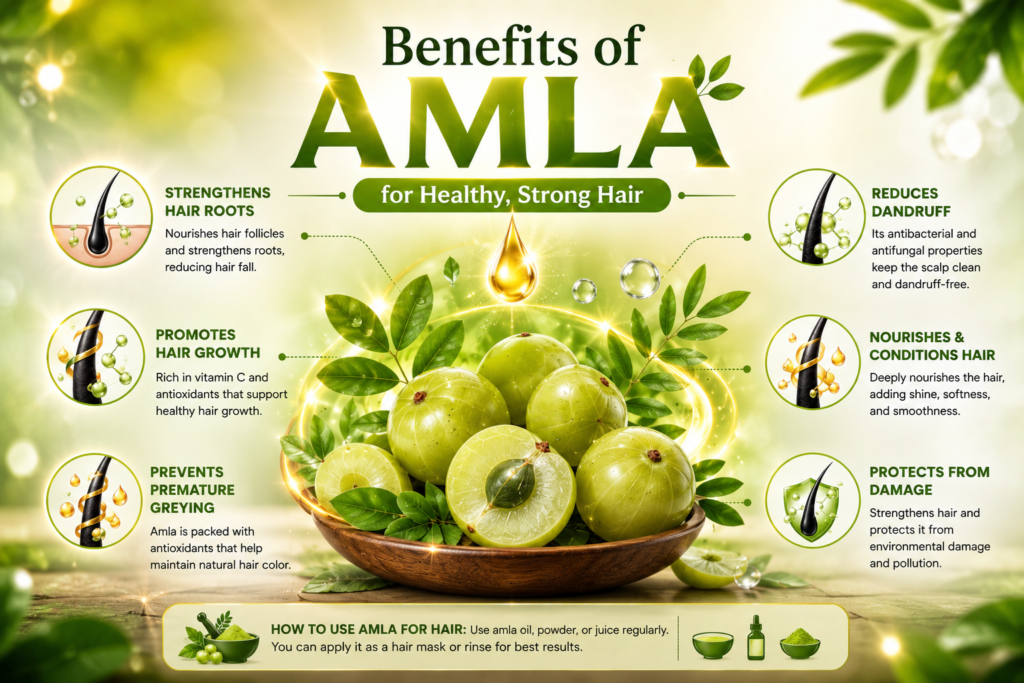
Amla nourishes hair follicles and increases the anagen (growth) phase of the hair cycle, leading to longer, thicker hair over time.
2. Reduces Hair Fall
Regular use of amla strengthens hair from the roots, reducing breakage and excessive shedding.
3. Prevents Premature Greying
Amla is rich in antioxidants that protect melanin-producing cells in the scalp, helping maintain your natural hair color for longer.
4. Controls Dandruff
Its anti-fungal and anti-bacterial properties keep the scalp clean and free from dandruff-causing bacteria.
5. Adds Shine and Softness
Amla smooths the hair cuticle, making hair appear shinier, softer, and more manageable.
Diet is one of the factor that is helps your hair growth so check this post for more knowledge. – read here
How to Use Amla for Hair Growth
If you are looking for how to use amla for hair growth so these are the few ways you can use alma.
Amla Oil Massage for hair growth
- Warm amla oil slightly and apply it to your scalp.
- Massage in circular motions for 10–15 minutes.
- Leave it on for at least 1 hour or overnight.
- Wash off with a mild shampoo.
Amla Powder Hair Mask
Mix 2 tablespoons of amla powder with water or coconut oil to form a paste. Apply it to your scalp and hair, leave for 30–45 minutes, then rinse thoroughly.
Amla and Coconut Oil Treatment
Boil dried amla pieces in coconut oil until the oil turns dark. Strain and store. Use this oil 2–3 times a week for best results.
Amla Juice for Hair
Drinking fresh amla juice daily provides internal nourishment to hair follicles. You can also apply amla juice directly to the scalp as a tonic.
How Often Should You Use Amla?
| Hair Type | Recommended Frequency |
| Normal hair | 2–3 times a week |
| Dry or damaged hair | 1–2 times a week |
| Oily scalp | Once a week |
For best results, use amla consistently for at least 8–12 weeks.
Does Science Support Amla for Hair Growth?
Yes. Studies suggest that amla extract can inhibit the enzyme 5-alpha reductase, which is responsible for converting testosterone into DHT — a key cause of hair loss. Research also confirms that Vitamin C in amla plays a direct role in collagen synthesis, which supports hair structure and growth.
Dermatologists often recommend amla as a complementary treatment for mild to moderate hair thinning.
Amla vs. Other Natural Remedies
| Remedy | Best For |
| Amla | Hair growth + greying prevention |
| Castor Oil | Thickness and moisture |
| Onion Juice | Regrowth after hair loss |
| Rosemary Oil | Scalp circulation |
Amla stands out because it addresses multiple hair concerns at once — growth, greying, dandruff, and strength.
Side Effects of amla on hair and Precautions:
Amla is generally safe for most people, but keep these points in mind:
if you are asking How Many Amla to Eat in a Day for Hair Growth? then read this article to get the answer – How Many Amla to Eat in a Day for Hair Growth?
- Do a patch test before applying amla oil or paste to the scalp.
- Amla can temporarily dry out very dry hair if used too frequently.
- People with scalp sensitivity should dilute amla oil with a carrier oil.
- Avoid using amla on chemically treated or colored hair without consulting a professional, as it may affect color.
Read More :
नीम के पत्ते खाने से क्या होता है? : Neem ke patte khane se kya hota hai?
Keeda Jadi Benefits for Men and Women
FAQs
Does amla really help in hair growth?
Yes. Amla supports hair growth by nourishing hair follicles, improving scalp circulation, and extending the active growth phase of hair. A 2024 clinical trial confirmed that women who took amla syrup for 12 weeks had significantly more hair in the growth phase compared to those who did not.
How to eat amla for hair growth?
You can consume amla in several ways:
Drink fresh amla juice on an empty stomach every morning
Mix amla powder (½ to 1 tsp) in warm water and drink it daily
Add amla powder to smoothies or yogurt to balance the sour taste
Take amla capsules or tablets as a daily supplement
Can amla stop hair fall?
Amla helps reduce hair fall by strengthening hair roots and blocking DHT, the hormone responsible for hair thinning and loss. It works best as a preventive and supportive remedy, especially for mild to moderate hair fall.
How often should I use amla for hair?
Amla oil massage — 2 to 3 times a week
Amla hair mask — once a week
Amla juice or capsules — daily
Consistency is the key. Even using it once or twice a week regularly gives better results than using it daily for a short period.
How many amla should you eat in a day?
general hair and health benefits, 1 to 2 fresh amla per day is enough for most people. If you are using amla in other forms, here is a simple guide:
Fresh amla — 1 to 2 pieces daily
Amla juice — 20 to 30 ml per day (can mix with water or honey)
Amla powder — ½ to 1 teaspoon per day
Amla capsules or tablets — as per the dosage mentioned on the pack or advised by a doctor

Deepak sagar is an Ayurvedic wellness content writer associated with Aarogya Jeevanam. With over 6 years of experience in Ayurvedic principles, herbal wellness, digestive health, immunity support, and holistic lifestyle guidance, he is dedicated to spreading authentic knowledge of traditional healing practices.
He specializes in creating educational content that helps readers understand the benefits of Ayurveda, natural remedies, healthy living habits, and preventive wellness approaches.