
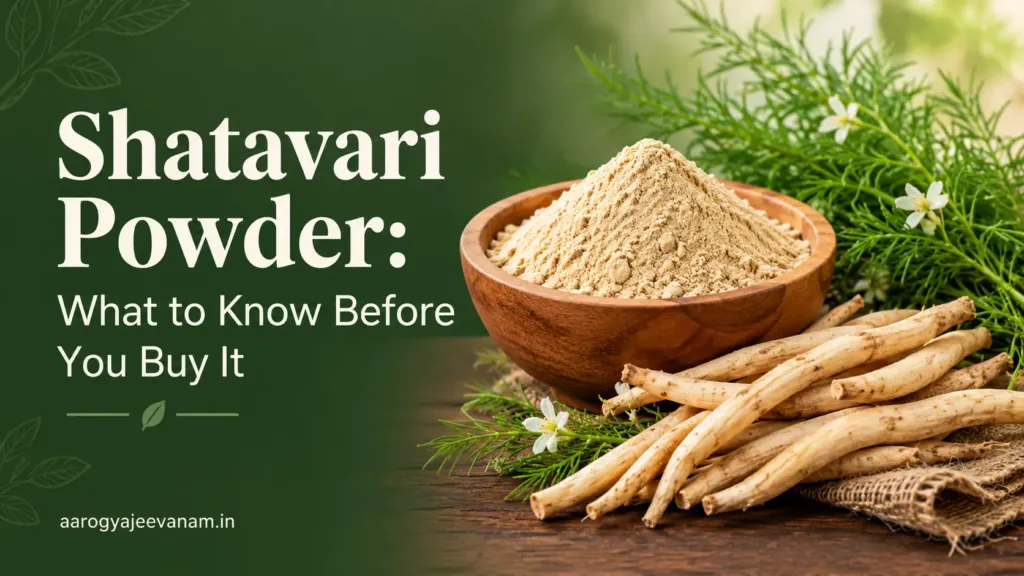
A jar of shatavari powder can look simple. Choosing one well takes a closer look at the label.
When I compare herbal powders, I start with identity: does the label clearly name Asparagus racemosus and the plant part used? Shatavari products commonly use the root, but a product should say what it contains rather than relying on a familiar front-label name.
Also read: Shatavari Churna: How I Choose a Product and Read the Label
Next, I look for a full ingredient list, batch or lot number, manufacturer details, expiry date, storage instructions and a quality-testing statement that can be verified. A long list of wellness promises is not a substitute for transparent sourcing or testing. Powder, extract and blends are not interchangeable by weight.
I would also ask a qualified clinician before use if I am pregnant or breastfeeding, managing a health condition, or taking medication. Research on shatavari is still developing, and product-specific evidence matters. My rule is simple: buy for clarity and fit, not for the biggest promise.
Table of Contents
A closer look at shatavari powder
For plain root powder, the central question is whether the product clearly identifies the root and gives a usable serving direction.
Related: Shatavari: The Ayurvedic Queen of Herbs for Hormonal Balance
I compare the complete ingredient panel, not only the front label. The botanical name, plant part, amount per serving and any other ingredients tell me what the product actually is. If it is an extract, I look for clear information about its form. A familiar herb name is not enough to establish that two jars are equivalent.
I also check manufacturer details, batch and expiry information, storage instructions and warnings. Quality statements are most useful when a company explains what was tested. Price should be compared per labelled serving, while remembering that root powder and concentrated extracts cannot be compared gram for gram. Those simple checks make a buying guide practical rather than promotional.
My takeaway
My takeaway is to buy only when I can explain what the product contains, how it is meant to be used and what evidence applies to that exact form. Clear labelling is more valuable than a promise that sounds impressive.
Related guides on Aarogya Jeevanam
- Shatavari Tablets vs Powder: Which Form Fits Your Routine?
- Shatavari Powder Benefits: Read the Claims, Then Check the Product
- Shatavari Benefits: What Is Traditional, and What Is Supported by Research?
Sources
Disclaimer: This article is for general information only and is not medical advice. Please consult a qualified healthcare professional before starting any supplement.
Frequently asked questions about shatavari powder
What should a shatavari powder label include?
Look for the botanical name, plant part, complete ingredients, manufacturer, batch details, expiry date and clear directions.
Is shatavari powder proven to treat a condition?
No supplement should be treated as a proven treatment on the basis of traditional use alone. Human evidence remains limited and depends on the exact preparation.
