
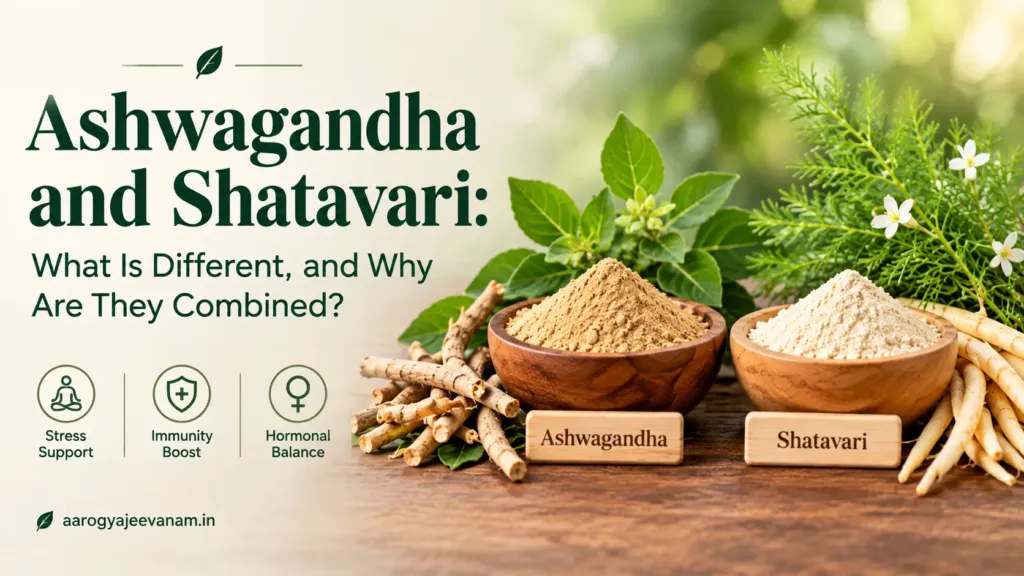
Two herbs on one label may sound like twice the benefit. In real life, it means you need to check twice as carefully.
Ashwagandha (Withania somnifera) and shatavari (Asparagus racemosus) are different plants with different histories in Ayurveda. Modern supplements also vary: root powders, concentrated extracts and multi-herb blends can have different compositions, so the herb name alone does not tell me what dose or evidence applies.
Also read: Ashwagandha vs Shatavari: How to Compare Them Without Guesswork
Some small or emerging studies have examined these herbs for specific outcomes, including menopausal symptoms, but that does not establish a broad benefit for everyone or prove that the pair is better than either herb alone. One recent trial of particular extracts is not evidence for every retail formula.
I would check the amount and plant part of each ingredient, the extract standardization, and any cautions on the label. Ashwagandha has recognized medication and health-condition cautions, and combination products can make side effects or interactions harder to trace. If I take medicines or have a chronic condition, I ask my clinician before combining supplements.
Table of Contents
A closer look at ashwagandha shatavari
For this pairing, the key question is whether each herb and its amount are disclosed, and whether the exact combination has been studied.
Related: Ashwagandha Ayurvedic benefits
I compare the complete ingredient panel, not only the front label. The botanical name, plant part, amount per serving and any other ingredients tell me what the product actually is. If it is an extract, I look for clear information about its form. A familiar herb name is not enough to establish that two jars are equivalent.
I also check manufacturer details, batch and expiry information, storage instructions and warnings. Quality statements are most useful when a company explains what was tested. Price should be compared per labelled serving, while remembering that root powder and concentrated extracts cannot be compared gram for gram. Those simple checks make a buying guide practical rather than promotional.
My takeaway
My takeaway is to buy only when I can explain what the product contains, how it is meant to be used and what evidence applies to that exact form. Clear labelling is more valuable than a promise that sounds impressive.
Related guides on Aarogya Jeevanam
- Ashwagandha and Shatavari Together: What to Consider First
- Shatavari Powder: What to Know Before You Buy It
- Shatavari Benefits: What Is Traditional, and What Is Supported by Research?
Sources
- NCCIH: Ashwagandha — Usefulness and Safety
- Randomized study of shatavari root extract for menopausal symptoms (Frontiers in Reproductive Health, 2025)
- Review: Plant profile, phytochemistry and pharmacology of Asparagus racemosus
Disclaimer: This article is for general information only and is not medical advice. Please consult a qualified healthcare professional before starting any supplement.
Frequently asked questions about ashwagandha shatavari
Are ashwagandha and shatavari the same herb?
No. They are different species: Withania somnifera and Asparagus racemosus.
Can I take both together?
A clinician or pharmacist can check your medicines and health history. Evidence for one particular combination does not automatically apply to all products.
