
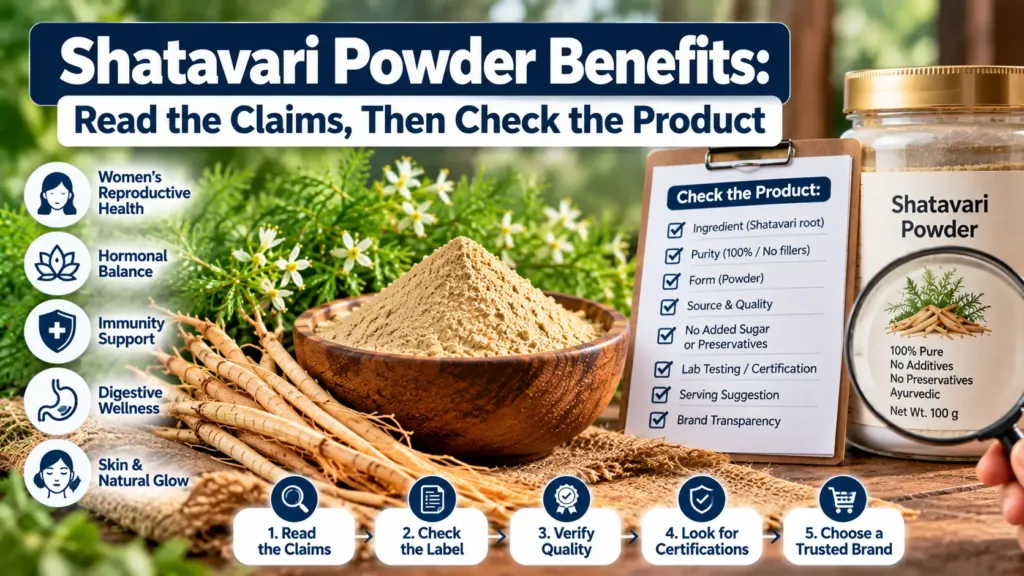
The phrase “powder benefits” sounds straightforward. The important detail is what powder, for whom, and studied how.
Shatavari powder usually refers to dried, powdered plant material, but sellers may also use “powder” loosely for blends or extracts. That distinction matters because products differ in concentration and composition. I look for the botanical name, plant part and ingredient amounts before reading the marketing copy.
Also read: Shatavari Ke Fayde: 7 Zaroori Baatein Jo Istemaal Se Pehle Samjhein
Research on shatavari includes traditional literature and a growing number of human studies on particular preparations. Early findings can be interesting, but they do not prove broad benefits for every person or product. A study of a standardized root extract is not automatically evidence for an unstandardized powder.
My practical approach is to treat benefits as a reason to investigate, not a guarantee. Choose transparent labeling, check warnings and discuss use with a clinician when medicines, pregnancy, breastfeeding or a medical condition are involved. For symptoms that disrupt daily life, seek an assessment rather than relying only on a supplement.
A closer look at shatavari powder benefits
A study of an extract should not be presented as proof for every plain powder sold under the same herb name.
Related: Shatavari: The Ayurvedic Queen of Herbs for Hormonal Balance
When I assess a health claim, I look for the participant group, preparation, dose, length of follow-up and outcome measured. A small study may be a promising signal, but it rarely settles the question. It also matters whether the result was repeated independently and whether the product on sale resembles the study product.
This is why I keep traditional use, early research and established treatment separate in the article. Readers should be able to see what is known and what remains uncertain. A supplement should not delay assessment of persistent or severe symptoms, and it should not replace prescribed care. A clinician can help interpret the evidence for a person's own circumstances.
My takeaway
My takeaway is to read a benefit claim as a question to check, not a result to assume. The study details, product form and health context determine how much confidence a reader should place in it.
Frequently asked questions about shatavari powder benefits
Does shatavari powder have more benefits than an extract?
There is no simple ranking. They are different preparations and need product-specific evidence.
What is the main thing to check?
Start with botanical identity, plant part, full ingredients, amount, batch details and any safety warnings.
Related guides on Aarogya Jeevanam
- Shatavari Benefits: What Is Traditional, and What Is Supported by Research?
- Shatavari Powder: What to Know Before You Buy It
- Shatavari Tablets vs Powder: Which Form Fits Your Routine?
Sources
- Randomized study of shatavari root extract for menopausal symptoms (Frontiers in Reproductive Health, 2025)
- Review: Plant profile, phytochemistry and pharmacology of Asparagus racemosus
Disclaimer: This article is for general information only and is not medical advice. Please consult a qualified healthcare professional before starting any supplement.
