

Table of Contents
Winter tends to bring lower energy for many people. Shorter days, later mornings and a heavier workload can make the season feel draining, and this is one reason ashwagandha capsules are searched for in November and December. This guide looks at what ashwagandha is, what the research actually shows about stress, sleep and energy, and what to check before buying a bottle.
The short version: there is some evidence that ashwagandha may help with stress and sleep in certain people, but the trials are small and short. There is no reliable evidence that it improves physical stamina or strength, so treat any “winter stamina” promise with caution.
Quick answer
Ashwagandha (Withania somnifera) has modest, inconsistent support for stress and sleep in small trials. Safety cautions apply in pregnancy, thyroid conditions, liver disease and when taking several medicines. Our Ashwagandha Herbal Capsules are listed at ₹599 (MRP ₹1,099) for 30 capsules.
01What Is Ashwagandha?
Ashwagandha is an herb whose root is used in traditional Ayurvedic practice. In the scientific literature it is usually described by its botanical name, Withania somnifera. Many supplements use a standardised root extract, though the exact extraction method and concentration vary from one brand to another. This variation is one reason why results in studies differ.
02What the Research Shows
The most useful summary we found is the NIH Office of Dietary Supplements fact sheet. It is a fair reference point because it sets out the strengths and the limits of the evidence side by side.
Stress and anxiety
A 2021 systematic review covered seven small trials with 491 adults, all conducted in India. It reported that ashwagandha significantly reduced stress and anxiety levels, with larger benefits at 500 to 600 mg a day. Later trials have been mixed. One 2023 trial found no reduction in perceived stress compared with placebo, although it did show a reduction in fatigue. A 2022 expert panel provisionally recommended 300 to 600 mg a day of root extract for generalised anxiety disorder but said more research is needed before a stronger recommendation can be made.
Sleep
The evidence for sleep comes from a small number of studies. A 2021 meta-analysis of five trials found a small but significant benefit over placebo. The effect was stronger at 600 mg a day, in treatments lasting at least eight weeks, and in people with insomnia.
Stamina and strength
Some product pages describe ashwagandha as helping endurance or strength. The NIH fact sheet does not address strength outcomes, and we did not find evidence that would support a claim of improved winter stamina. If you train hard, the evidence for stamina is not a reason to buy on its own.
03Why Study Quality Matters
The trials are small, short and differ in dose, preparation and outcome measures. Some results are based on self-reporting. This means it is hard to say how much of an effect is attributable to the herb and how much is due to expectation or lifestyle changes made during the study. The honest reading is “some evidence, not strong proof”.
04Safety: Who Should Be Careful
Ashwagandha is generally well tolerated in the short term, with mild side effects such as stomach upset, loose stools, nausea and drowsiness being the most common. Long-term safety is not well established.
- Liver: Serious liver injury has been reported in a small number of cases, including jaundice. Some cases involved combination products or people already taking other medicines. If you notice yellowing of the skin or eyes, dark urine, or persistent abdominal pain, stop and seek medical advice.
- Thyroid: Ashwagandha can affect thyroid hormone levels. Case reports describe overactive thyroid symptoms in some users, which settled after stopping. If you have a thyroid condition or take thyroid medicine, check with your doctor first.
- Pregnancy and breastfeeding: Some experts advise against use because of reports of possible pregnancy loss, and some national agencies advise against it. Do not use it if you are pregnant or breastfeeding.
- Hormone-sensitive conditions: Ashwagandha may raise testosterone levels. Men with hormone-sensitive prostate cancer should avoid it unless their doctor agrees.
- Medicines: It may interact with diabetes medicines, blood-pressure medicines, sedatives, immunosuppressants and thyroid medicines.
05The Product: Ashwagandha Herbal Capsules
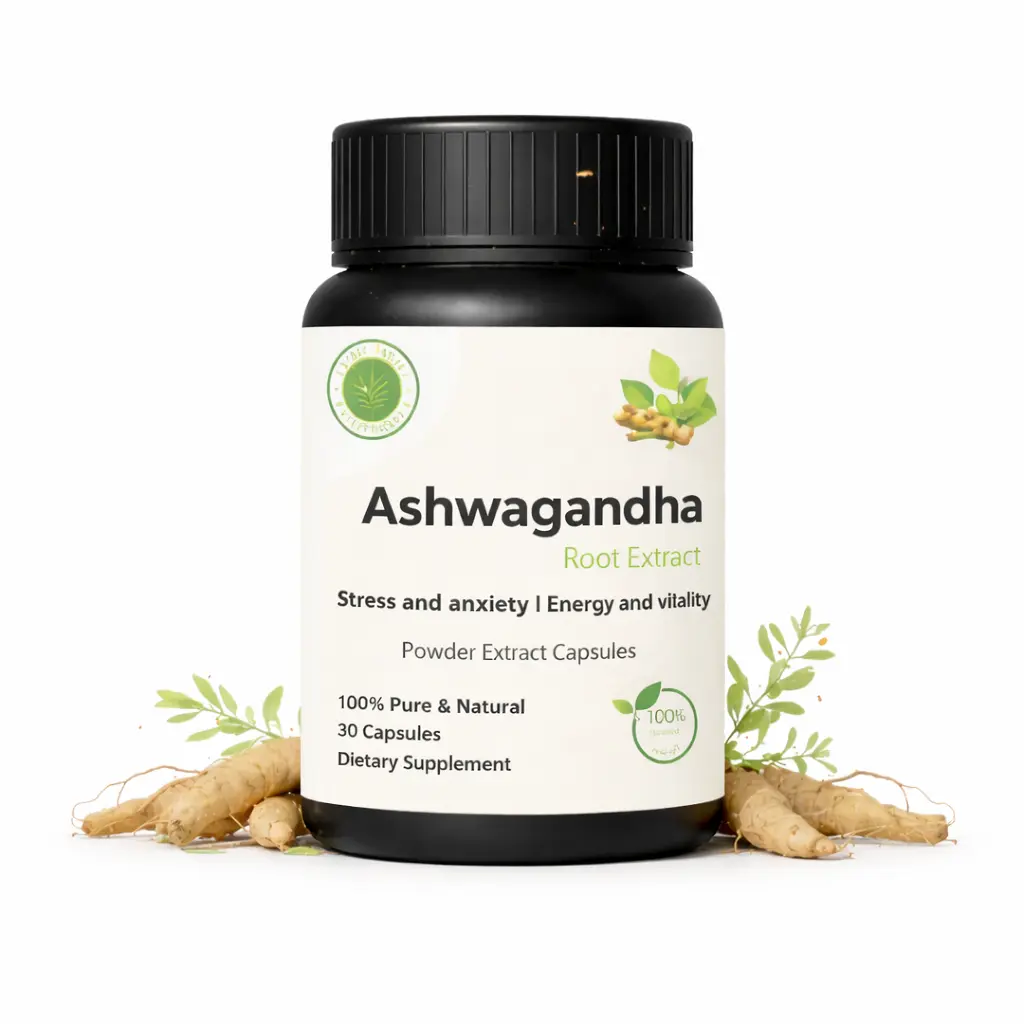
Ashwagandha Herbal Capsules
30 Veg Capsules · Root extract
- Withania somnifera root extract
- Net weight 40 g · Best before 36 months
- Prepaid orders: extra 5% off
Before you buy, look at the label carefully. The page lists “Pure Ashwagandha Extract” and “Ashwagandha Root Extract” but does not give the amount of extract per capsule. The page also gives two dosing directions, one capsule twice daily and one capsule daily after any meal. Ask the seller which is correct. The page recommends using it consistently for at least 8 to 12 weeks, which is the timeframe used in most studies of sleep and stress.
If you are interested in a combined product, we also list an Ashwagandha and Moringa combo. Adding a second herb does not change the safety cautions above, and it is worth checking the full ingredient list and dosage on any combination before use.
06Frequently Asked Questions
Can ashwagandha improve winter stamina?
There is no reliable evidence that ashwagandha improves physical stamina or strength. The research is stronger for stress and sleep, and even there the results are modest.
How long does ashwagandha take to work?
Most studies that looked at sleep and stress ran for at least eight weeks. Short-term use under a few weeks is unlikely to show a clear result.
Is ashwagandha safe with other medicines?
It can interact with several types of medicine. Speak to your doctor or pharmacist before combining it with any prescribed drug.
Should I take it at night?
Some people take it in the evening because of its link to sleep, but the evidence on timing is limited. Follow the label, and do not increase the dose to get a faster result.
Does ashwagandha cure stress or anxiety?
No. It is a traditional herb that may support relaxation in some people. It is not a treatment for stress, anxiety or any other condition. If stress or anxiety is affecting your daily life, see a healthcare professional.
07Our Verdict
Ashwagandha has a real but modest evidence base for stress and sleep, and it is not a proven winter stamina product. If you decide to try it, choose a brand that discloses its extract, confirm the dose, watch for side effects, and speak to your doctor if you have a thyroid condition, liver disease, pregnancy, or any medication.
Disclaimer: These products are not intended to diagnose, treat, cure or prevent any disease. This article is general information and is not medical advice. Results may vary from person to person. Consult a qualified healthcare professional before use, especially if you are pregnant, breastfeeding, taking medication or managing a medical condition. Keep out of reach of children.