
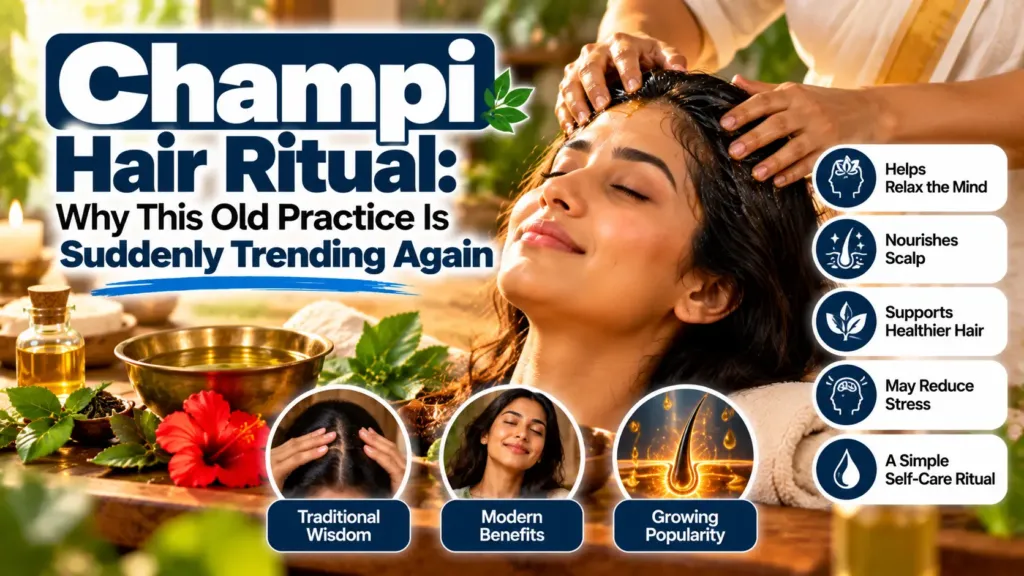
India Had a Self-Care Ritual Before the Word Became Trendy
Before self-care became an industry, Indian households already had champi. Oil, hands, scalp and time were enough.
Maybe that simplicity explains why the practice feels surprisingly modern today. We live in a world of notifications, multitasking and rushed routines. Champi asks us to slow down.
Table of Contents
The Benefit May Not Be Hair Growth
Gentle scalp massage can feel relaxing. Hair oil can condition the hair fibre. The ritual can create a pause between work and rest.
None of those points requires claiming that massage automatically regrows hair.
How to Make Champi More Practical
Choose an oil that suits your hair and scalp. Use moderate pressure. Avoid scratching. You do not need to soak the scalp in oil. Wash according to your scalp’s needs.
If your scalp becomes itchier, more inflamed or more flaky after oiling, change the routine rather than assuming discomfort means the treatment is ‘working’.
When Hair Loss Needs a Different Conversation
Patchy loss, sudden heavy shedding, scalp inflammation and persistent thinning deserve professional assessment. A traditional massage may still be enjoyable, but it should not delay finding the cause.
My Perspective
Champi does not need a miracle narrative. Its strongest modern value may be the combination of gentle grooming, conditioning and a deliberate pause.
Frequently Asked Questions
Does champi help hair growth?
Evidence for direct hair-growth effects is limited. Its clearer role is as a traditional conditioning and relaxation practice.
How often should I do champi?
There is no universal frequency. Choose what suits your scalp and hair.
Is champi good for dandruff?
Not necessarily. Some scalp conditions may become uncomfortable with heavy oiling, so individual assessment matters.
Related Reads on Aarogya Jeevanam
- Why Hair Oiling Works Better After Monsoon (Ayurveda’s Simple Logic)
- Bhringraj Oil: Traditional Use vs What Science Has Confirmed So Far
- Stress, Sleep and Hair in Women: An Ayurvedic View
Editorial note: This article is intended for general wellness information. Health content should not be used as a substitute for individual medical diagnosis or treatment.
