

Triphala is one of those Ayurvedic formulations that people often start taking without giving much thought to the question: “Do I really need it every day?”
It is traditionally used for digestive and bowel health, and many people take it as a daily wellness habit. But “natural” does not automatically mean “suitable for everyone” or “safe in unlimited amounts.”
So, is it actually safe to take Triphala every day?
For some healthy adults, short-term daily use appears to be well tolerated. But the evidence does not justify saying that everyone should take Triphala indefinitely. The dose, formulation, reason for taking it, existing health conditions and medicines you use all matter.
Table of Contents
That distinction is important—and often missing from simple online answers.
What Exactly Is Triphala?
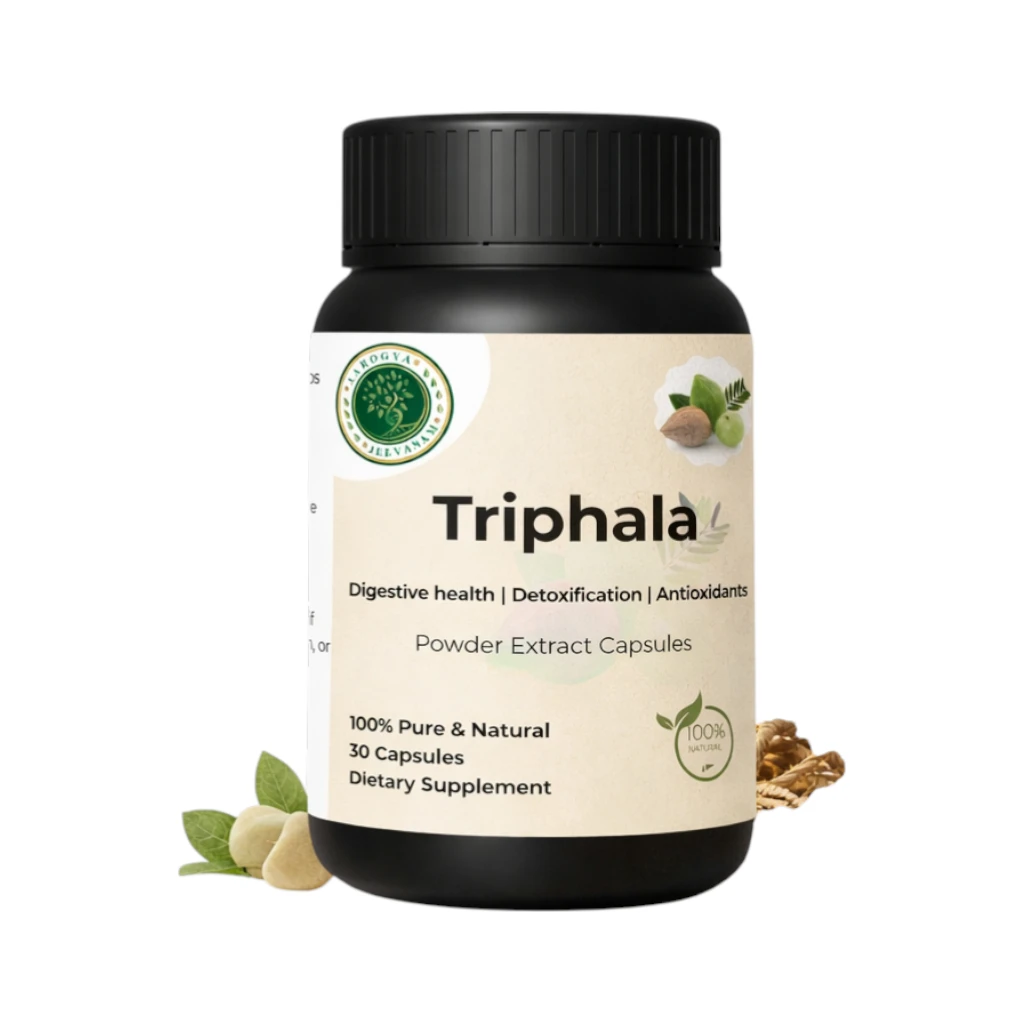
Triphala is a traditional Ayurvedic combination made from three fruits:
- Amalaki (Amla)
- Haritaki
- Bibhitaki
Rather than being a single herb, Triphala is a combination of these three ingredients. It has traditionally been used as a digestive and bowel-supporting formulation and is also described in Ayurvedic literature as a Rasayana preparation.
Modern research has investigated Triphala for several areas, including digestive health, metabolic markers and its safety profile. However, research findings should not be interpreted as proof that Triphala can replace medical treatment or that everyone needs to take it daily.
So, Is Taking Triphala Every Day Safe?
The most honest answer is: it depends.
Clinical evidence provides some reassurance about short-term use. In one Phase I study, 20 healthy volunteers took 2,500 mg of an aqueous Triphala extract once daily for four weeks. No serious adverse effects were reported during the study.
A systematic review of 12 randomized controlled trials involving 749 participants also found no serious adverse events associated with Triphala during the treatment periods studied. However, the researchers pointed out an important limitation: evidence about long-term safety remains limited.
That means there is a difference between:
“Daily Triphala has been tolerated in clinical studies”
and
“Everyone can safely take Triphala every day for years.”
The second statement goes beyond what the available evidence can establish.
Why Does the Dose Matter?
One mistake people commonly make with herbal products is assuming that more will work better.
That is not necessarily true.
Triphala can influence bowel movements, and a higher amount may be more likely to cause digestive discomfort in sensitive individuals. Reported minor complaints in clinical research have included loose stools and other gastrointestinal symptoms.
Your response may also depend on the form of Triphala you are using. Powder, capsules, extracts and different formulations are not automatically equivalent in terms of dose or concentration.
Following the serving instructions on a standardized product is therefore more sensible than copying someone else’s dose from social media.
What Can You Expect From Regular Triphala Use?
Triphala has traditionally been associated with digestive and bowel support.
Modern research has explored several possible effects, including changes in metabolic markers. A systematic review found that some clinical trials reported improvements in lipid profile, blood glucose or anthropometric measurements, although the researchers also emphasized the need for larger and better-designed trials.
For everyday users, however, it is better to keep expectations realistic.
Triphala should not be treated as a shortcut for fixing an unhealthy diet, chronic constipation, poor sleep or a sedentary lifestyle.
If your digestion is consistently uncomfortable, the bigger question is often why the problem is happening.
Can Triphala Cause Loose Motions?
Yes, it can happen.
Because Triphala may influence bowel function, some people may notice softer or more frequent stools, particularly if the amount they take does not suit them.
Possible digestive complaints can include:
- Loose stools
- Abdominal discomfort or cramping
- Increased bowel frequency
- Gas or bloating
The response is individual, so an amount that feels comfortable for one person may be too much for another.
If you develop persistent diarrhoea, significant abdominal pain, weakness or signs of dehydration after taking Triphala, it is sensible to stop and seek medical advice rather than simply reducing or increasing the dose yourself.
Should You Take Triphala Every Night?
There is no universal rule saying that everyone should take Triphala at night.
The appropriate timing and amount depend on why you are taking it, the formulation and your individual circumstances.
This is another reason not to copy a friend’s routine blindly. Someone taking Triphala for occasional bowel support may have a very different situation from someone using it as part of a broader Ayurvedic regimen.
The goal should be an appropriate routine—not a permanent routine simply because it has become a habit.
How Long Can You Take Triphala?
This is where we need to be particularly careful.
Clinical studies have examined Triphala for different periods, and a systematic review reported treatment durations ranging from 25 days to one year. But the same review noted that data specifically establishing long-term safety were limited.
So, there is no evidence-based reason to tell every reader:
“Take Triphala continuously for X months and then take a break.”
A better approach is to consider why you are taking it and whether you still need it.
If you have been taking Triphala continuously for a long period, especially for a persistent health complaint, discussing the routine with a qualified healthcare professional is more appropriate than following a fixed internet schedule.
Who Should Be More Careful With Triphala?
Daily Triphala may not be appropriate for everyone.
Extra caution is reasonable if you:
- Are pregnant or breastfeeding
- Are giving it to a child
- Have persistent diarrhoea or significant digestive symptoms
- Have chronic or unexplained constipation
- Have an existing medical condition
- Take prescription medicines regularly
- Have previously experienced an allergic reaction to one of its ingredients
If you fall into one of these categories, don’t assume that an Ayurvedic formulation is automatically risk-free because it contains plant ingredients.
A healthcare professional can consider your individual situation, other medicines and the reason you want to use Triphala.
What If You’re Taking Triphala for Constipation?
This is one of the most common reasons people reach for Triphala.
But recurring constipation deserves more attention than simply adding a supplement.
Before relying on Triphala every day, look at the basics:
Are you drinking enough fluids?
Are you eating enough fibre?
Are you physically active?
Has your bowel pattern recently changed?
If constipation is persistent, severe or accompanied by symptoms such as unexplained weight loss, blood in the stool, persistent vomiting or significant abdominal pain, self-treatment should not be the only plan.
The supplement may address a symptom while the underlying cause remains unidentified.
A Simple Way to Approach Daily Triphala
If a qualified professional has suggested Triphala for you, a sensible approach is to keep things simple.
1. Start with the recommended amount
Don’t increase the quantity simply because you think a stronger effect will be better.
2. Follow the product instructions
Different Triphala products can have different formulations and concentrations.
3. Watch your digestion
Pay attention to changes in stool consistency, frequency, cramping or other digestive symptoms.
4. Don’t ignore persistent symptoms
If you continue to need Triphala because of an ongoing digestive problem, investigate the underlying issue rather than continuously increasing your intake.
5. Review long-term use
If Triphala has become part of your daily routine for months, consider discussing whether continued use is actually necessary.
My Take: Daily Triphala Isn’t a Simple Yes-or-No Question
In my view, the biggest mistake is turning Triphala into an “always safe” or “always unsafe” product.
The research gives us a more nuanced picture.
Short-term clinical studies provide some evidence of tolerability, including a four-week study in healthy volunteers and a systematic review in which no serious adverse events were reported during the study periods.
At the same time, the available evidence does not establish that every person can take every Triphala preparation indefinitely without consideration of dose, health status or other medicines.
That is why the better question isn’t:
“Can I take Triphala every day?”
It is:
“Is taking Triphala every day appropriate for me, at this dose, for this reason, and for this length of time?”
That is a much more useful question.
Final Takeaway
Triphala can be well tolerated by some healthy adults when used appropriately, but daily use should not be treated as universally safe or necessary for everyone.
Research has provided encouraging short-term safety data, but evidence for indefinite long-term use remains limited.
If you’re considering Triphala as part of your daily routine, start with the recommended amount, pay attention to how your body responds and avoid treating it as a substitute for proper evaluation of persistent health problems.
And perhaps most importantly, remember this simple principle:
Natural does not mean unlimited. The right dose, right person and right purpose matter.
Frequently Asked Questions
Is it safe to take Triphala every day?
For some healthy adults, short-term daily use has been well tolerated in clinical studies. However, long-term safety data are limited, so daily use should not automatically be considered appropriate for everyone.
Can Triphala cause loose stools?
Yes. Changes in bowel movements, including loose stools, can occur in some people. If symptoms are persistent or severe, stop using it and consult a healthcare professional.
How long can I take Triphala continuously?
There is no single duration that is appropriate for everyone. Clinical studies have used different durations, while evidence specifically establishing indefinite long-term safety remains limited.
Can everyone take Triphala?
No. Individual health conditions, pregnancy or breastfeeding, age, allergies and concurrent medicines can affect whether it is appropriate.
Is Triphala a treatment for chronic constipation?
It should not be used as a substitute for finding the cause of persistent constipation. Ongoing or unexplained constipation should be discussed with a healthcare professional.
Should I take Triphala without asking a doctor?
Healthy adults using a commercially prepared product according to its instructions may not necessarily require a medical consultation for every short-term use. However, professional advice is particularly important if you have a medical condition, take regular medicines, are pregnant or breastfeeding, or intend to use Triphala long term.
