
Table of Contents
Kaunch Beej: (Mucuna Pruriens)
Kaunch beej is one of the most respected herbs in Ayurveda — a small, unassuming seed with a remarkable reputation for supporting strength, vitality, fertility, and a calm, focused mind. Known by many names across India and beyond — kauch beej, konch beej, kavach beej, kapikacchu, atmagupta, velvet bean, and botanically Mucuna pruriens — this single herb has been used for centuries, and modern research is now taking a serious look at why.
This complete guide explains what kaunch beej is, its key benefits for men and women, how to use it safely, the correct dosage, possible side effects, and how to choose a quality product. Whether you’re new to Ayurvedic herbs or already exploring natural wellness, this is your starting point.
What is Kaunch Beej?
Kaunch beej refers to the seeds of Mucuna pruriens, a climbing legume native to tropical regions of India, Africa, and Southeast Asia. In English it is commonly called the velvet bean or cowhage, named for the fine hairs on its pods. In classical Ayurvedic texts it appears as Kapikacchu or Atmagupta.
What makes this seed special is its natural chemistry. Kaunch beej is one of the richest known plant sources of L-Dopa (levodopa) — a direct precursor to dopamine, a neurotransmitter that influences mood, motivation, movement, focus, and hormonal signalling. This single compound explains much of why the herb has been valued for both the body and the mind.
Kaunch Beej in Ayurveda
In Ayurveda, kaunch beej is classified primarily as a Vajikarana (a herb that supports reproductive strength and vitality) and a Rasayana (a rejuvenating, restorative tonic). It is considered warming and nourishing, and is traditionally used to pacify aggravated Vata dosha — the energy associated with movement, the nervous system, and, when imbalanced, with fatigue, dryness, and restlessness.
Ayurvedic practitioners have long recommended kapikacchu to support stamina, healthy reproductive function, steady energy, and a stable, balanced mind. This traditional use lines up closely with what researchers are now studying in the lab.
Active Compounds: Why Kaunch Beej Works
The headline compound is L-Dopa, which the body can convert into dopamine. Because dopamine is involved in so many systems, this gives kaunch beej a wide range of traditional applications:
- Mood and motivation — dopamine is central to how we feel driven, focused, and emotionally balanced.
- Nervous system support — L-Dopa’s role in dopamine production is the reason kaunch beej has been studied in the context of nerve and movement health.
- Hormonal signalling — dopamine influences pathways linked to healthy testosterone and reproductive function.
Good-quality kaunch beej supplements are often standardised to a specific L-Dopa percentage, which is one of the clearest markers of potency. More on that later in this guide.
Key Benefits of Kaunch Beej
The benefits below reflect traditional Ayurvedic use supported, in several cases, by emerging modern research. Kaunch beej is a wellness supplement, not a cure for any disease — it is best thought of as support for the body’s own systems.
1. Supports stamina, strength, and energy
Kaunch beej is most popularly used as a natural tonic for stamina and physical energy. As a Rasayana, it is traditionally taken to reduce fatigue, support muscle strength, and help the body recover after physical exertion — which is why it has become popular with people who train regularly. You can read more in our dedicated guide on kaunch beej for stamina, gym & muscle.
2. Supports healthy testosterone and male vitality
For men, kaunch beej has a long-standing reputation as a vitality herb. Through its influence on dopamine and related hormonal pathways, it is traditionally used to support healthy testosterone levels, libido, and overall male reproductive wellness. Several studies have explored mucuna pruriens in the context of male fertility and reproductive parameters. We cover this in depth in kaunch beej benefits for men.
3. Supports fertility and reproductive health
Beyond testosterone, kaunch beej is traditionally associated with reproductive nourishment in both men and women. In men, research has looked at its effect on sperm count, motility, and quality. In women, it has been used traditionally to support hormonal balance and reproductive wellness — explored further in kaunch beej benefits for women.
4. Supports mood, focus, and a calm mind
Because L-Dopa feeds dopamine production, kaunch beej is traditionally used to support a stable mood, mental focus, and resilience to everyday stress. People often describe a sense of steady motivation and calm rather than stimulation. Our guide on kaunch beej, dopamine & mood goes deeper into the science here.
5. Supports the nervous system
The same L-Dopa content that supports mood is the reason kaunch beej has been studied in relation to nerve and movement health. In Ayurveda, kapikacchu has long been used as a nervine tonic to nourish and calm the nervous system, particularly where Vata imbalance is involved.
6. Antioxidant and overall wellness support
Kaunch beej also provides antioxidant compounds that help the body manage oxidative stress, supporting general vitality and healthy ageing as part of a balanced lifestyle.
How to Use Kaunch Beej
Kaunch beej is available in two main forms — capsules and churna (powder) — and the right choice depends on your routine and preference.
- Capsules are pre-measured, tasteless, and convenient. They are the easiest way to take a consistent daily dose, which matters because herbal benefits build with regular use. This is why most people choose kaunch beej capsules for daily wellness.
- Powder (churna) is the traditional form, usually mixed with warm milk or water. It allows flexible dosing but has a strong, earthy taste and needs measuring each time.
We compare both side by side in kaunch beej powder vs capsules — which is better.
Kaunch beej Recommended dosage
A typical dose is 1–2 capsules per day, or about ½ to 1 teaspoon of powder, taken after meals — or as directed by an Ayurvedic practitioner. It is wise to start with the lower dose and increase gradually as your body adjusts.
Best time and way to take it
Kaunch beej is traditionally taken after meals with lukewarm water or warm milk. Many people prefer the warm-milk method in the evening, as it aligns with the herb’s nourishing, Vata-balancing nature. Consistency matters more than timing — herbal Rasayanas work best taken daily over several weeks. For a full breakdown, see how to use kaunch beej safely.
How long until you see results
Kaunch beej is not an instant stimulant. Most people use it consistently for 4 to 8 weeks alongside good sleep, a balanced diet, and regular activity before noticing meaningful changes in energy, stamina, or mood.
kaunch beej Side Effects and Precautions
Kaunch beej is generally well tolerated when taken at recommended doses, but because it is biologically active, a few precautions apply:
- Start low. Because of its L-Dopa content, taking too much too soon may cause mild nausea, bloating, or restlessness in sensitive individuals.
- Pregnancy and breastfeeding. Pregnant or nursing women should avoid kaunch beej unless advised by a qualified practitioner.
- Existing medication. If you take medication for Parkinson’s, blood pressure, diabetes, or any psychiatric condition, consult your doctor first, as L-Dopa can interact with these.
- Medical conditions. Anyone with a diagnosed health condition should seek professional advice before starting.
We cover this fully in kaunch beej side effects & who should avoid it. As with any supplement, do not exceed the recommended dosage.
Kaunch Beej vs Ashwagandha
These two are the most popular Ayurvedic vitality herbs, and people often ask which to choose. In short: ashwagandha is primarily an adaptogen best known for stress, sleep, and calm energy, while kaunch beej leans more toward dopamine-driven mood, motivation, stamina, and reproductive vitality. Many people even use them together. For a full comparison, read kaunch beej vs ashwagandha — which is better.
How to Choose a Quality Kaunch Beej Product
Not all kaunch beej is equal. When buying, look for:
- Standardised L-Dopa content — a stated L-Dopa percentage is the clearest sign of potency.
- An Ayush license number — confirms the product meets Ayurvedic manufacturing standards.
- Third-party lab testing — for purity and freedom from heavy metals and contaminants.
- Clear sourcing and transparency — a brand that names its ingredients and standards.
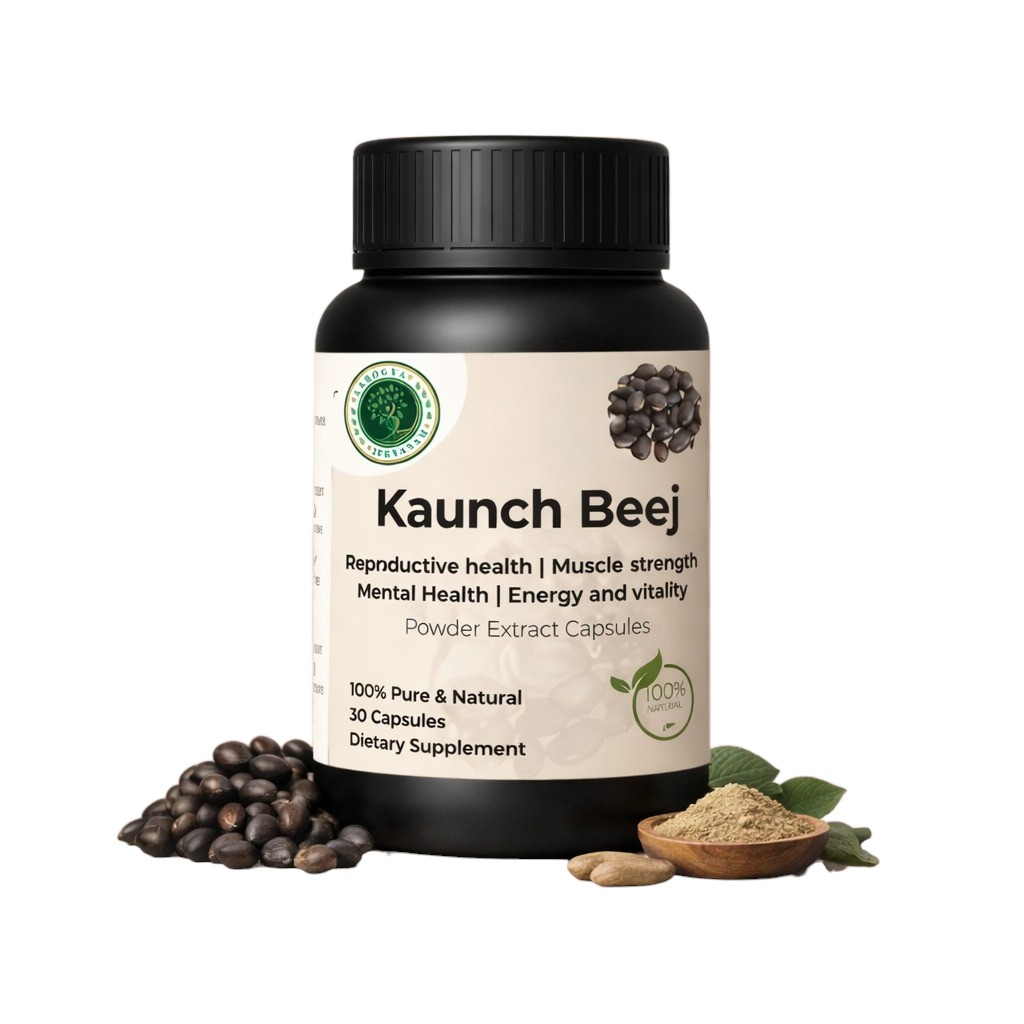
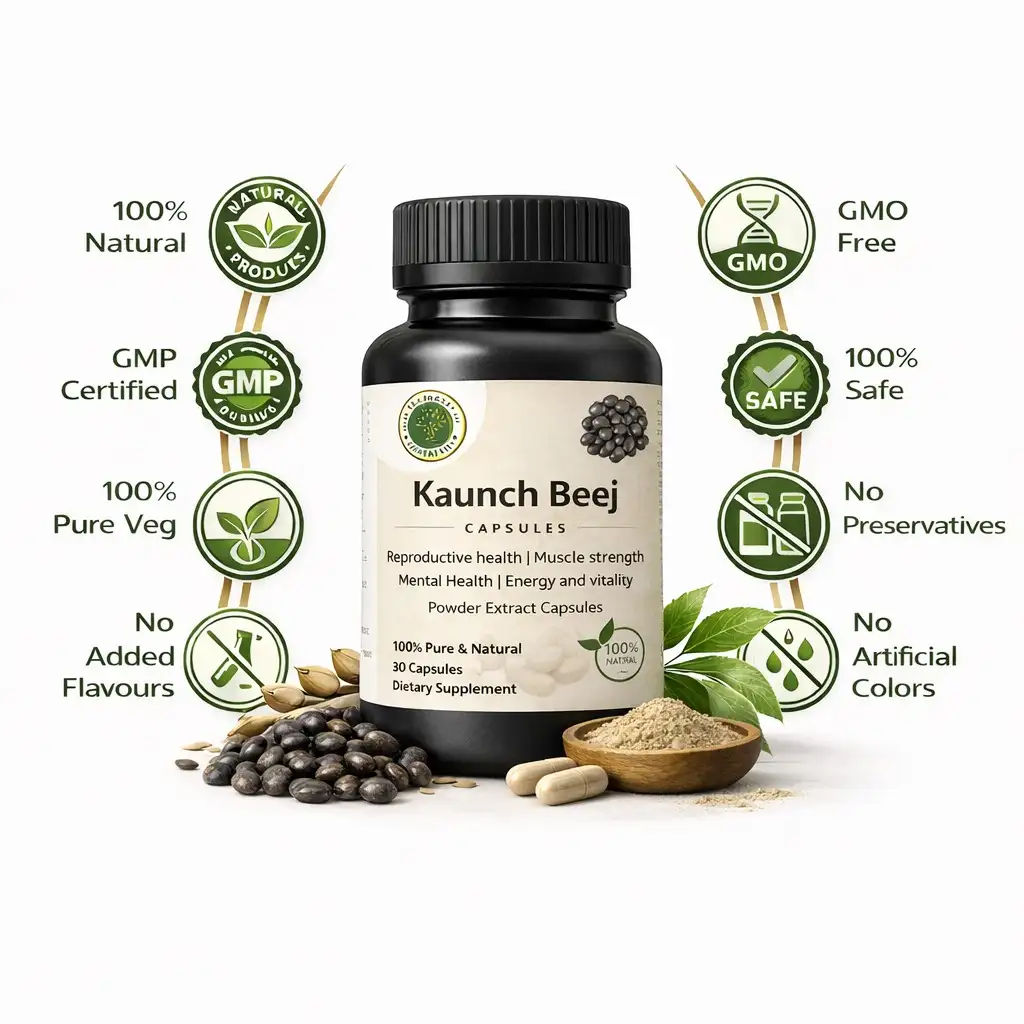
Our Kaunch Beej Capsules are made to these standards — native-sourced, lab-tested, and Ayush-compliant — so you get consistent potency in every dose.
Kaunch Beej Capsules: Benefits at a Glance
Ready to feel the difference? Our Kaunch Beej Capsules give you a clean, convenient daily dose of this powerful Ayurvedic herb — no measuring, no mess, just real support for your stamina, strength, and vitality. Lab-tested and Ayush-certified for quality you can trust.
- Boosts Stamina & Energy — supports strength, endurance, and reduced fatigue
- Supports Men’s Vitality — traditionally used for healthy testosterone and libido
- Aids Reproductive Health — supports fertility and hormonal balance
- Enhances Mood & Focus — L-Dopa supports dopamine, mood, and motivation
- Helps Manage Stress — promotes calm, balanced energy
- Antioxidant Support — helps fight oxidative stress
- Pure & Certified — lab-tested, Ayush-certified, native-sourced
Buy Kaunch Beej Capsules – ORDER NOW
Frequently Asked Questions
What are the benefits of kaunch beej? (Kaunch beej ke fayde)
Kaunch beej is traditionally used to support stamina, energy, healthy testosterone and male vitality, fertility, mood and focus, and the nervous system, thanks largely to its natural L-Dopa content. A detailed Hindi guide is available at कौंच बीज के फायदे और नुकसान.
Is kaunch beej safe for daily use?
Yes, for most healthy adults at the recommended dose of 1–2 capsules a day. Start low, take it after meals, and consult a practitioner if you have any medical condition or take regular medication.
Can women take kaunch beej?
Yes. While it is best known as a men’s vitality herb, kaunch beej is also used traditionally to support women’s hormonal balance and reproductive wellness. Pregnant and breastfeeding women should avoid it unless advised otherwise.
How long does kaunch beej take to work?
Most people use it consistently for 4–8 weeks before noticing clear benefits, since it nourishes the body gradually rather than acting as a quick stimulant.
Is kaunch beej the same as mucuna pruriens?
Yes. Kaunch beej, kapikacchu, velvet bean, and cowhage are all common names for the same plant, Mucuna pruriens.
Should I take kaunch beej powder or capsules?
Capsules are easier and more consistent for daily use; powder is the traditional form taken with milk or water. See our full powder vs capsules comparison.
Kaunch beej (Mucuna pruriens) is a time-tested Ayurvedic herb whose modern appeal makes complete sense once you understand its natural L-Dopa content. From stamina, strength, and male vitality to mood, focus, and reproductive wellness, it offers broad, gentle support for both body and mind — especially when taken consistently as part of a healthy lifestyle.
If you’re ready to add this herb to your routine, explore our lab-tested, Ayush-certified Kaunch Beej Capsules for a convenient, consistent daily dose.
This article is for educational purposes only and is not a substitute for professional medical advice. Kaunch beej is a wellness supplement and is not intended to diagnose, treat, cure, or prevent any disease. Consult a qualified healthcare or Ayurvedic practitioner before use, especially if you are pregnant, nursing, taking medication, or managing a health condition.

Deepak sagar is an Ayurvedic wellness content writer associated with Aarogya Jeevanam. With over 6 years of experience in Ayurvedic principles, herbal wellness, digestive health, immunity support, and holistic lifestyle guidance, he is dedicated to spreading authentic knowledge of traditional healing practices.
He specializes in creating educational content that helps readers understand the benefits of Ayurveda, natural remedies, healthy living habits, and preventive wellness approaches.