
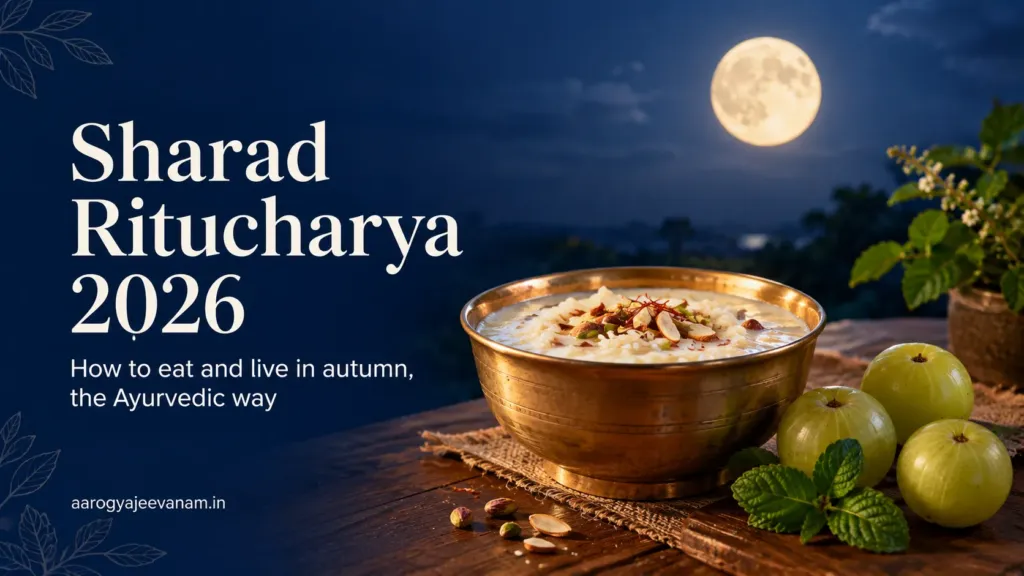
Quick answer: Sharad Ritucharya is Ayurveda’s routine for autumn, roughly mid-September to mid-November in India. Classical texts say Pitta, which builds up quietly during the monsoon, gets aggravated when the strong autumn sun returns. The traditional advice is to favour sweet, bitter and cooling foods, and to cut down on curd, sour, fried and very spicy food.
Table of Contents
Every October, my grandmother used to quietly stop setting dahi at home. No announcement, no explanation. The curd pot just disappeared from the kitchen until winter.
As a child, I thought it was one of those random family rules. Years later, reading Ayurveda properly, I found the same rule written in Charaka Samhita, nearly two thousand years old. In Sharad Ritu, avoid curd.
That moment changed how I look at “old family habits.” Many of them are not superstitions. They are seasonal science that got passed down without the explanation. This guide is my attempt to put the explanation back.
What Is Sharad Ritu?
Ayurveda divides the year into six seasons (ritus) of about two months each. Sharad is the autumn that comes right after Varsha (the monsoon). In most of India, it runs roughly from mid-September to mid-November.
You can feel the shift even without a calendar. The rain stops. The sky turns a clear, deep blue. The afternoon sun suddenly feels sharp again, while mornings and nights start turning pleasant.
This year, Sharad also brings a busy festive stretch: Ayurveda Day on 23 September, Navratri from 11 October, and Sharad Purnima on the night of 25 October. That’s exactly why a seasonal routine matters now. Festive eating is about to begin.
Why Pitta Rises When the Rains Stop
This is the part I wish more people understood, because it explains so much.
Ayurveda describes a three-stage cycle for each dosha: it accumulates (sanchaya), then gets aggravated (prakopa), then settles (prashamana). For Pitta, the fire and heat principle, the cycle runs like this:
- Monsoon (Varsha): Pitta accumulates. Damp weather, weaker digestion and sour-natured food and water let Pitta build up quietly. The cool rainy weather keeps it from showing.
- Autumn (Sharad): Pitta flares. The body, used to cloudy skies, is suddenly exposed to strong sun. The stored heat gets “provoked.”
- Early winter (Hemanta): Pitta settles. Cold weather naturally calms it.
In everyday life, classical texts link Sharad with things many of us notice every October: acidity and heartburn, a short temper, excessive thirst, skin rashes or breakouts, and a feeling of heat in the eyes or body.
I want to be honest here. This is the traditional Ayurvedic model, not a diagnosis. If you have persistent acidity, skin problems or fever, please see a doctor. As a way of noticing your body across seasons, though, I’ve found this framework remarkably accurate.
What to Eat in Sharad Ritu
The classical rule is simple. Choose foods that are sweet, bitter and astringent in taste, and light and cooling in nature. Here’s what that looks like in an Indian kitchen.
Foods to favour:
- Grains: rice (especially older rice), wheat, jau (barley)
- Dals: moong dal is the star of this season. Light, cooling and easy to digest.
- Vegetables: lauki, turai, parwal, tinda, pumpkin, and a little karela for bitterness
- Fruits: amla, pomegranate, grapes, sweet apples, pears
- Fats and dairy: a spoon of ghee, and fresh milk if it suits you
- Spices: go gentle. Dhaniya (coriander), saunf (fennel), elaichi and jeera are good choices.
- Sweeteners: mishri and a little honey. Traditional texts mention honey for this season, but never heat honey.
Amla deserves a special mention. It is one of the best-loved fruits in Ayurveda, and fresh amla starts arriving in markets around this time. If you’re unsure how much to have, I’ve written about how many amla to eat in a day.
Foods to reduce:
- Dahi (curd): the classic Sharad “avoid.” Ayurveda considers curd sour and heat-producing in effect, which is the opposite of what autumn needs.
- Sour and fermented foods: pickles, tamarind-heavy dishes, very sour gravies
- Fried and oily food: pakoras, samosas, heavy namkeen
- Very spicy food: extra green chilli, red chilli-heavy curries
- Excess salt
- Alcohol
You don’t need to be rigid. I never eliminate a food completely. I simply make the “favour” list the base of my plate and let the “reduce” list become occasional.
Daily Habits the Classical Texts Recommend
Sharad Ritucharya isn’t only about food. The daily routine matters just as much.
Avoid harsh afternoon sun. The midday Sharad sun is exactly what provokes Pitta. If you’re out between 12 and 3, use an umbrella, a cap or a cotton dupatta.
Skip daytime sleep. Classical texts discourage napping in this season. It is said to disturb digestion.
Wear light, breathable clothes. Cotton and light colours suit Sharad.
Enjoy the early evening moonlight. This one is my favourite. Ayurveda describes spending time in the moonlight during the first part of the night as soothing in autumn. An after-dinner walk on a clear Sharad evening is its modern version.
Drink clean, naturally cooled water. Classical texts describe hamsodaka: water warmed by the sun in the day, cooled by the moon at night, and considered purified in this season. The modern takeaway is simple. Drink clean, room-temperature or naturally cooled water, and plenty of it. Skip ice-cold drinks, which Ayurveda says weaken digestion.
The Sharad Purnima Kheer: Tradition That Makes Seasonal Sense
This year, Sharad Purnima falls on the night of 25 October. Across India, families make rice kheer and leave it under the full moon overnight, then eat it the next morning.
Whatever you believe about moonlight and nectar, look at the dish itself. Milk, rice, a little sugar or mishri, cooked gently and eaten cool. That is almost a textbook Pitta-pacifying food: sweet, cooling and nourishing, eaten right in the middle of the season when Pitta runs highest.
This is what I love about our festivals. Many of them quietly carry seasonal health wisdom. We just stopped reading the instructions.
A small practical note: if you leave kheer out overnight, cover it with a fine cloth or mesh to keep insects away, and eat it early the next morning. People with diabetes should keep the portion small and ask their doctor about sugar.
What About Classical Sharad Treatments?
If you read about Sharad Ritucharya online, you’ll see mentions of virechana (therapeutic purgation), tikta ghrita (medicated bitter ghee) and raktamokshana (bloodletting). These are real classical recommendations for this season.
These are clinical therapies, not home remedies. They should only be done under a qualified BAMS doctor, after a proper assessment. Please don’t try purgatives or medicated ghee at home based on an article, including this one. If you’re curious whether a seasonal detox is right for you, speak to our Ayurveda team or a vaidya near you.
My Simple Sharad Grocery List
If you want one practical takeaway, print this list and stick it on your fridge for the next two months:
- Moong dal (whole and split)
- Older rice, jau (barley), wheat atta
- Lauki, turai, parwal, tinda, pumpkin, karela
- Fresh amla, pomegranate, seasonal pears
- Desi ghee, fresh milk
- Mishri, saunf, dhaniya seeds, elaichi, jeera
- Coconut water
- Fresh coriander and mint leaves
Who Should Be Careful
Seasonal food changes are generally gentle. Still, please speak to your doctor before making big dietary changes if any of these apply to you:
- you have diabetes (especially with sweet foods like kheer, mishri and honey)
- you are pregnant or breastfeeding
- you have a kidney condition (watch coconut water and potassium intake)
- you take regular medicines
- you are planning the routine for a child
And if you have fever, persistent acidity, skin rashes that don’t settle, or any symptom that worries you, get it checked. Post-monsoon is also dengue and viral fever season, and no food routine replaces testing.
Frequently Asked Questions
What is Sharad Ritucharya?
Sharad Ritucharya is the Ayurvedic routine for autumn, roughly mid-September to mid-November. It focuses on calming Pitta through cooling, sweet and bitter foods, and avoiding strong sun, curd, sour and fried food.
Why does Pitta increase in Sharad Ritu?
According to Ayurveda, Pitta accumulates during the monsoon. When the strong autumn sun returns after the rains, this stored heat gets aggravated. That is why acidity, irritability and skin issues are traditionally linked with this season.
Why should we avoid curd in Sharad Ritu?
Classical texts, including Charaka Samhita, advise avoiding dahi in Sharad. Ayurveda considers curd sour and heat-producing in effect, which can worsen Pitta during autumn.
What should we eat in Sharad Ritu?
Favour moong dal, rice, barley, lauki, turai, parwal, amla, pomegranate, a little ghee, milk and mishri. Keep spices gentle, like fennel, coriander and cardamom.
Is Sharad Purnima kheer good for health?
Traditionally, yes. Milk-rice kheer eaten cool is sweet and cooling, which suits the Pitta-heavy autumn season. People with diabetes should keep portions small and check with their doctor.
When does Sharad Ritu start and end?
Sharad Ritu runs roughly from mid-September to mid-November, after the monsoon (Varsha) and before early winter (Hemanta). Exact timing varies by region and local weather.
