
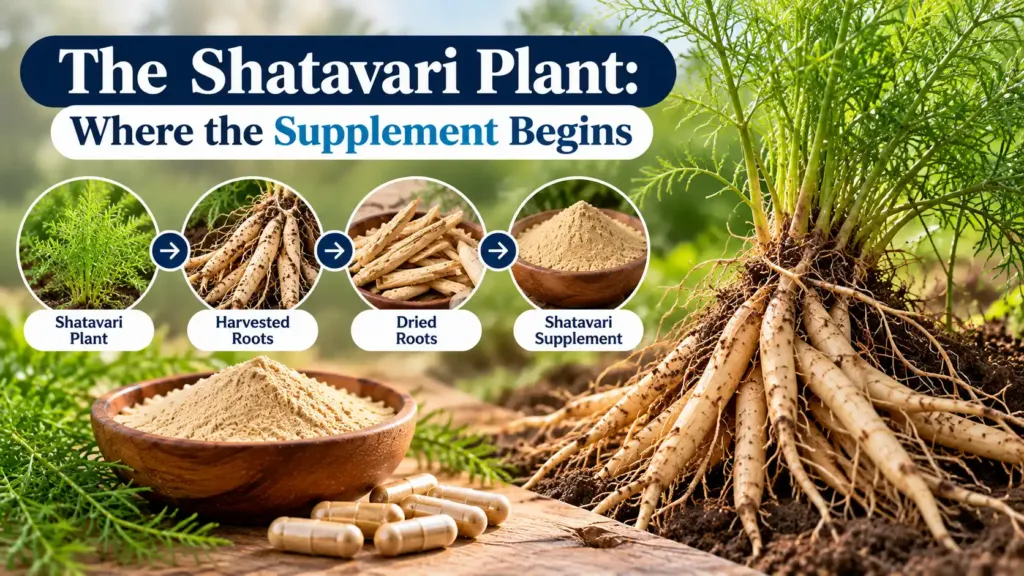
Before shatavari becomes a powder or capsule, it is a climbing plant with a botanical identity worth knowing.
Shatavari is the common name for Asparagus racemosus, a perennial climbing plant in the asparagus family. It is native across parts of South Asia and is valued in traditional systems of medicine. The root is the part most commonly discussed in commercial supplements.
Also read: Shatavari Benefits: What Is Traditional, and What Is Supported by Research?
Plant identity matters because common names can overlap and supply chains can obscure what part or species was used. A responsible supplement label should name the botanical species and plant part. Cultivation, harvesting, drying and storage can all affect raw material quality, which is why traceability and testing are useful questions.
I find the plant story interesting, but it should not be confused with proof of a health outcome. Botanical history explains where an ingredient comes from; clinical research asks whether a specific preparation helps people safely. Those are related questions, but they are not the same question.
A closer look at shatavari plant
The plant story helps explain the ingredient, but botanical history and clinical proof answer different questions.
Related: Shatavari: The Ayurvedic Queen of Herbs for Hormonal Balance
The botanical name and plant part help distinguish the source ingredient, but they do not confirm the quality of a finished product. Harvesting, drying, milling and storage can affect raw material. A responsible maker should be able to explain identity checks and quality controls, and sustainability statements are stronger when they describe specific sourcing practices.
I find it useful to separate the plant's history from modern product claims. Botanical facts explain what the ingredient is; clinical studies ask whether a specific preparation helps people safely. A photograph or traditional name cannot answer the second question. That distinction gives readers a more complete story from plant to supplement.
My takeaway
My takeaway is that knowing the plant is only the beginning. Identity, sourcing, finished-product quality and human evidence each add a separate piece to the story.
Frequently asked questions about shatavari plant
What is the botanical name of shatavari?
Asparagus racemosus is the commonly used botanical name.
Which part of the plant is used in supplements?
Many supplements use the root, but check each product label because preparations can vary.
Related guides on Aarogya Jeevanam
- Shatavari Powder: What to Know Before You Buy It
- Kapiva Shatavari: What to Verify Before You Buy
- Shatavari Kalpa vs Shatavari Powder: What Changes?
Sources
Disclaimer: This article is for general information only and is not medical advice. Please consult a qualified healthcare professional before starting any supplement.
