

Quick answer: Triphala is a classical Ayurvedic blend of three dried fruits: amla, bibhitaki and haritaki. It is mainly used to support digestion and regular bowel movements. Small studies suggest it may help mild constipation, but it isn’t meant for everyone to take daily forever. Start with a small amount, and stop if you get loose stools or cramps.
Table of Contents
In almost every North Indian home I grew up around, there was one jar that nobody labelled but everybody recognised. Brownish powder, slightly bitter smell, kept on the top shelf. Triphala.
My elders took half a spoon at night with warm water “to keep the stomach clean.” Nobody questioned it, and nobody measured it either.
Today, triphala is sold everywhere. Capsules, tablets, gummies, even “detox teas.” And along with the popularity came a lot of exaggerated claims. Weight loss, glowing skin, “flushing toxins,” even cancer prevention.
So I want to do something simple in this post. Explain what triphala actually is, what it can realistically do, what the research genuinely shows, and, most importantly, whether you should really be taking it every day.
What Is Triphala?
Triphala literally means “three fruits.” It is made from the dried fruits of three trees native to India:
- Amalaki (amla), Emblica officinalis: sour and cooling, rich in vitamin C
- Bibhitaki (baheda), Terminalia bellirica: astringent, traditionally linked with the respiratory tract and digestion
- Haritaki (harad), Terminalia chebula: the laxative “engine” of the formula, which is the main reason triphala helps bowel movements
In the classical form, the three are mixed in equal parts. Some traditions and brands use unequal ratios, so the effect can vary from product to product.
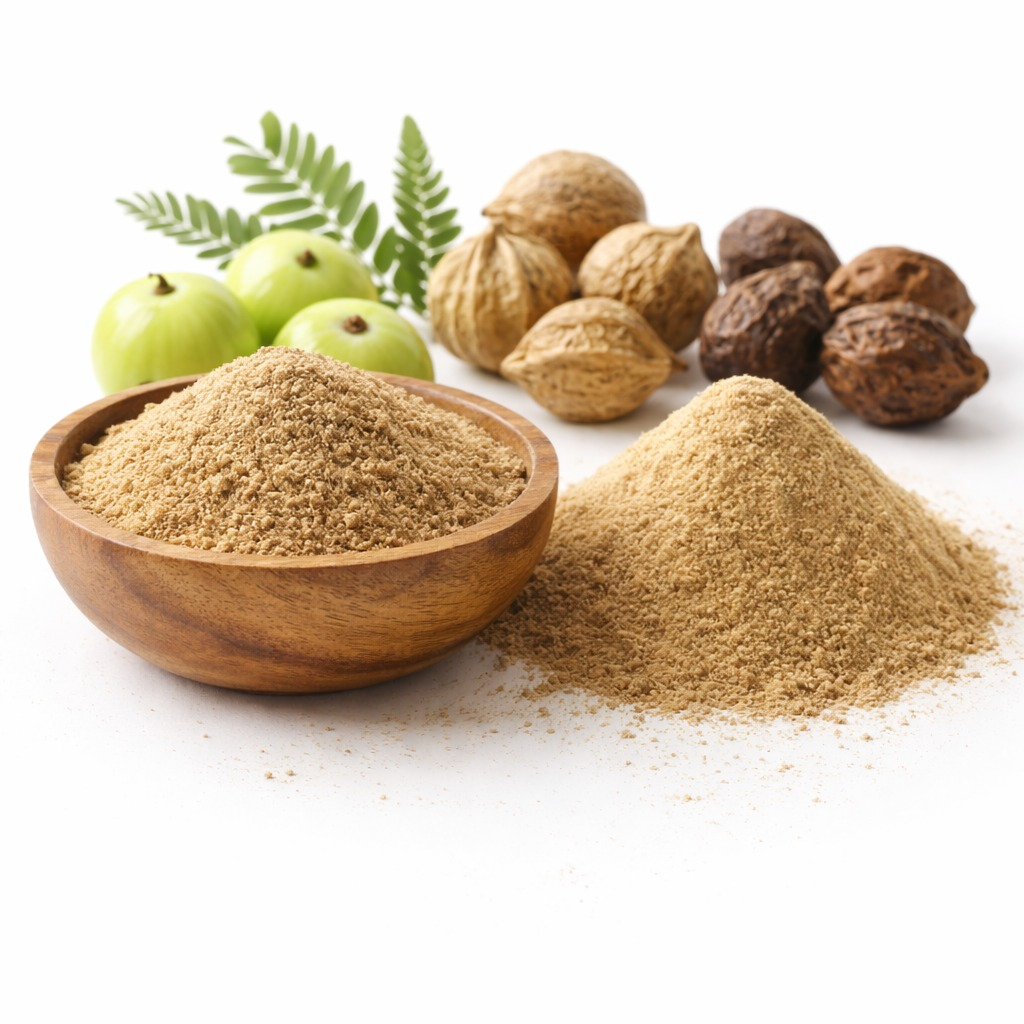
Here’s a detail I find fascinating. Ayurveda describes triphala as containing five of the six tastes: sweet, sour, bitter, pungent and astringent. Only salty is missing. This is one reason it’s traditionally considered balancing for all three doshas (tridoshic), which is rare for a single formula.
What Triphala Actually Does for Your Gut
1. Supports regular bowel movements
This is triphala’s main, best-known use. Haritaki in particular has a traditional anulomana action. In simple words, it helps things move downward in the right direction.
Research suggests triphala may improve gut movement (peristalsis) and help with mild constipation. Most of the clinical studies, though, are small, many are open-label (without a placebo group), and product quality varies a lot.
2. May support a healthier gut environment
Some laboratory and early human research suggests triphala’s polyphenols may help beneficial gut bacteria and discourage harmful ones. This is interesting science, but it is still early. It doesn’t mean triphala is a proven “gut microbiome fix.”
3. A gentle, non-habit-forming routine (for most people)
Traditionally, triphala is described as a mild, nourishing laxative. It is considered gentler than harsh stimulant laxatives. Even so, “gentle” doesn’t mean you should need it forever. I’ll come back to this below.
Beyond digestion: oral health
This one surprises most people. Triphala mouthwash has been tested in several Indian dental trials for plaque and gum health, sometimes with results comparable to standard mouthwashes. Most of those studies were small and done in schoolchildren. It’s a genuine research area, but don’t swap your dentist’s advice for it.
Haritaki: The “King” Inside the Formula
If you’ve been seeing “haritaki” everywhere lately, you’re not imagining it. Searches for it have been rising sharply.
In Ayurveda, haritaki is so highly respected that it is sometimes called the “king of medicines.” Classical texts praise it for digestion, and it’s the ingredient that gives triphala most of its bowel-moving effect.
Some people take haritaki alone for occasional constipation. Taken on its own, though, it’s more strongly laxative and more drying than triphala. For most people, triphala, where amla balances haritaki, is the gentler everyday choice. If you want to try haritaki alone, do it under a vaidya’s guidance.
How to Take Triphala
These are general traditional practices, not a prescription. Please check with your doctor or vaidya, especially if you have any health condition.
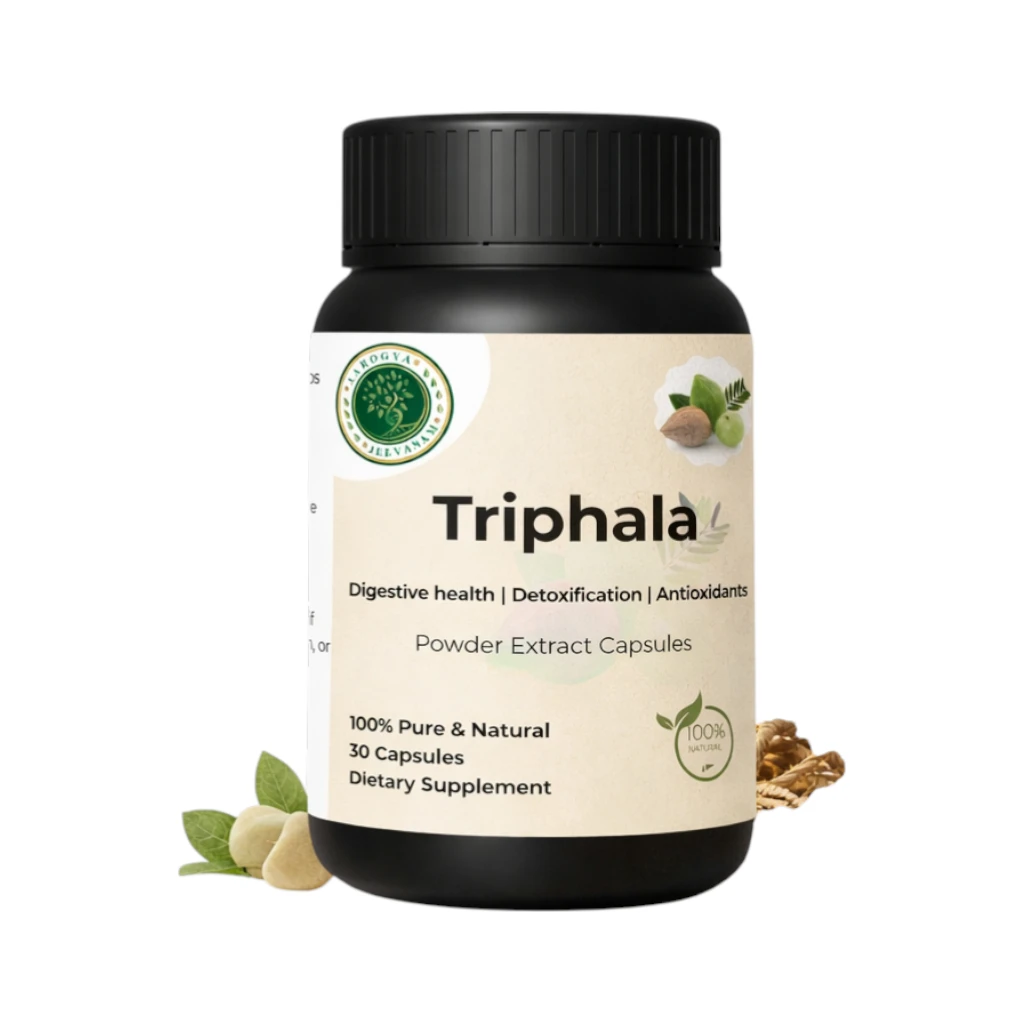
Common form: Triphala churna (powder) is the most traditional. Tablets and capsules are more convenient and avoid the bitter taste.
Common starting amount: Many Ayurvedic practitioners start adults at around half a teaspoon of churna (roughly 1–2 g) in a cup of warm water. They adjust only if needed. If you’re using tablets or capsules, follow the label and don’t exceed it.
Timing: Traditionally taken at bedtime, about an hour or two after dinner, for bowel regularity. Some people take it early in the morning on an empty stomach instead.
My personal rule: Start low and watch your body for a few days. Your stool should feel easier and more regular, not urgent, loose or crampy. If it does, cut the amount or stop.
Pair it with the basics. Triphala works best alongside enough water, fibre and movement. In autumn, the light, seasonal diet I described in my Sharad Ritucharya guide supports digestion naturally. And if you already eat fresh amla, remember triphala contains amla too. Here’s my guide on how much amla is sensible in a day.
Is It Safe to Take Triphala Every Day?
This is the question I get asked most, and the honest answer is: it depends on who you are and why you’re taking it.
Here’s how I think about it.
Short-term daily use is usually fine for healthy adults. Many people take triphala nightly for a few weeks to reset their digestion without problems.
Long-term daily use deserves a second look. If you feel you need triphala every night just to pass stool, that’s a signal, not a solution. It may mean your diet, water intake, activity or an underlying condition needs attention. Many practitioners prefer cycles, for example a few weeks on and then a break, rather than endless daily use.
Needing more and more is a red flag. If the same amount stops working and you keep increasing it, stop and see a doctor.
In Ayurveda, the goal was never lifelong dependence on a formula. The goal was to restore your own digestive fire (agni) so you eventually don’t need the support.
Possible Side Effects
Triphala is generally well tolerated, but side effects can happen, especially at higher doses:
- loose stools or diarrhoea
- stomach cramps or discomfort
- gas or bloating in the first few days
- dehydration, if loose stools continue
If any of these happen, reduce the amount or stop. If loose stools continue, please see a doctor.
Who Should Avoid Triphala (or Check With a Doctor First)
- Pregnant or breastfeeding women. Its laxative effect is not advised without medical supervision.
- Children. Only under a doctor’s or vaidya’s guidance.
- People with diarrhoea, IBS-D, or inflammatory bowel disease (Crohn’s, ulcerative colitis)
- People who are underweight, weak or recovering from illness. Ayurveda considers cleansing formulas unsuitable when the body is depleted.
- People with diabetes on medication. Amla may affect blood sugar, so ask your doctor.
- People on regular medicines, including blood thinners
- Anyone with a planned surgery. Tell your doctor about all herbs you take.
One more caution: some people wash their eyes with triphala water, a traditional practice. Please don’t put any homemade solution in your eyes. Home preparations can easily be contaminated, and eye infections are serious. Talk to an eye doctor instead.
How to Choose a Good Triphala Product
As I mentioned in my Ayurveda Day guide, reading the label tells you a lot:
- The three fruits should be named clearly.
- Look for a licence number, batch number and expiry date.
- The label should give a clear dose.
- Avoid products that promise weight loss, “detox” or disease cures.
- If possible, choose brands that test for heavy metals and microbial contamination.
This article is for general wellness information and is not medical advice. For any health condition, please consult a qualified doctor or Ayurvedic practitioner.
At Aarogya Jeevanam, we’d rather you understand an herb before you buy it. If you’d like personal guidance on digestion, you can consult our Ayurveda team or read more about us.
Frequently Asked Questions
What are the main benefits of triphala?
Triphala is mainly used to support digestion and regular bowel movements. Small studies suggest it may help mild constipation and support gut health. It is also being studied as a mouthwash for oral health. Evidence for other claims, such as weight loss, is limited.
Is it safe to take triphala every day?
For healthy adults, short-term daily use is usually well tolerated. Long-term daily use should be discussed with a doctor, especially if you feel you need it to pass stool. Many practitioners recommend using it in cycles rather than continuously.
When is the best time to take triphala?
Traditionally, triphala is taken at bedtime with warm water, about one to two hours after dinner. Some people prefer early morning on an empty stomach.
What are the side effects of triphala?
Common side effects include loose stools, stomach cramps and gas, usually at higher doses. Reduce the amount or stop if these occur, and see a doctor if loose stools continue.
What is haritaki good for?
Haritaki is traditionally used for digestion and occasional constipation. It is the main bowel-moving ingredient in triphala. On its own it is stronger and more drying, so it’s best taken under a vaidya’s guidance.
Who should not take triphala?
Pregnant or breastfeeding women, children without medical advice, and people with diarrhoea or inflammatory bowel disease should avoid it. So should people who are underweight or weak. Anyone on regular medicines should check with a doctor first.
