
Table of Contents
Kaunch Beej Powder vs Capsules: Which is good for you?
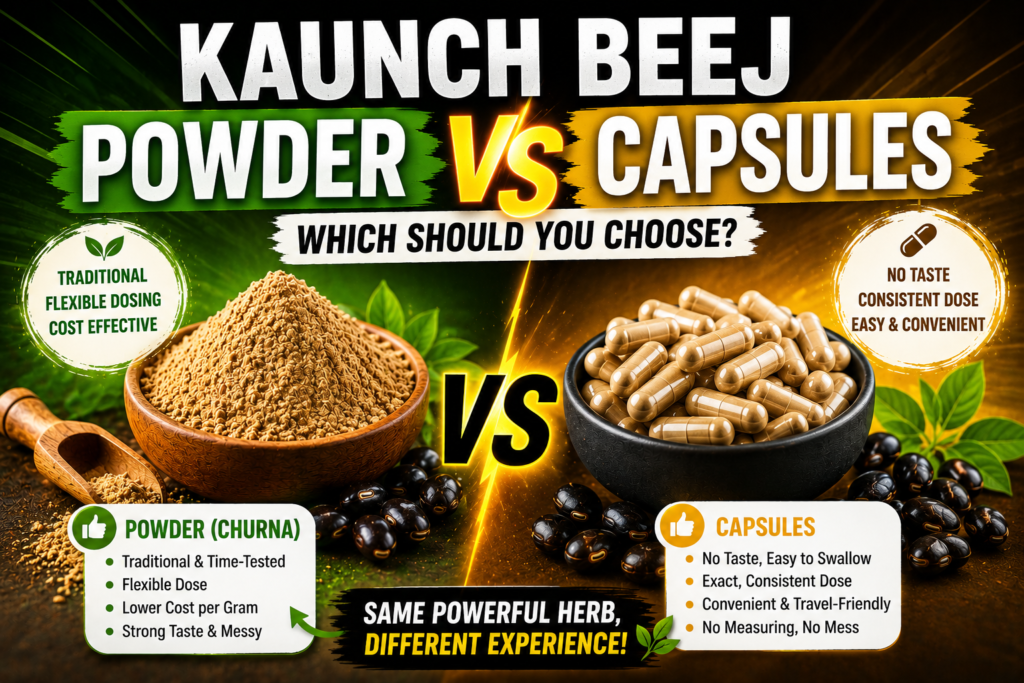
Kaunch beej (Mucuna pruriens) comes in two main forms — traditional powder (churna) and modern capsules. Both deliver the same powerful herb, but they suit different routines and preferences. Here’s a simple breakdown to help you choose the right one.
Kaunch Beej Powder (Churna)
The powder is the classic Ayurvedic form, usually mixed with warm milk or water.
Pros:
- Traditional, time-tested method
- Flexible dosing — adjust the amount easily
- Often lower cost per gram
Cons:
- Strong, earthy, slightly bitter taste that many find hard to take
- Needs measuring every single time
- Messy and less convenient for travel or busy mornings
- Easy to take an inconsistent dose
Kaunch Beej Capsules
Capsules contain a pre-measured dose of kaunch beej in a tasteless, easy-to-swallow form.
Pros:
- No taste — you skip the bitterness entirely
- Exact, consistent dose every time — which matters, since herbal benefits build with regular use
- Convenient — easy to carry, travel with, and take on schedule
- No measuring, no mess
Cons:
- Slightly higher cost per dose than loose powder
- Fixed dose per capsule (though most people find 1–2 ideal)
Our Kaunch Beej Capsules are lab-tested and Ayush-certified, giving you reliable potency in every dose.
Side-by-Side Comparison
| Feature | Powder (Churna) | Capsules |
|---|---|---|
| Taste | Strong, bitter | None |
| Convenience | Low | High |
| Dosing accuracy | Manual | Pre-measured |
| Travel-friendly | No | Yes |
| Consistency | Harder to maintain | Easy |
| Cost per gram | Lower | Slightly higher |
Which Should You Choose?
- Choose powder if you follow traditional Ayurvedic routines, don’t mind the taste, and want to adjust your dose flexibly.
- Choose capsules if you value convenience, a consistent dose, and no bitter taste — the easiest way to stay regular, which is what actually delivers results.
For most people building a daily wellness habit, capsules win on convenience and consistency. If you’re ready to start, explore our Kaunch Beej Capsules, and see our guide on how to use kaunch beej for dosage and timing. For the full picture of benefits, read our complete Kaunch Beej guide.
Frequently Asked Questions
Kaunch Beej Powder vs Capsules which is better?
Both contain the same herb. Powder is traditional and flexible but bitter and messy; capsules are tasteless, pre-measured, and convenient. For consistent daily use, most people prefer capsules.
Are kaunch beej capsules as effective as powder?
Yes. Capsules contain the same kaunch beej, just in a measured, tasteless form. In fact, the consistent dosing often makes capsules more effective in practice, since benefits depend on regular use.
Why do kaunch beej capsules cost more than powder?
Capsules involve extra processing, standardisation, and pre-measured dosing, which adds convenience and consistency — usually worth the small difference for daily users.
How do I take kaunch beej powder?
Mix ½ to 1 teaspoon into warm milk or water, usually after meals. The milk also helps mask its strong taste. See our how to use kaunch beej guide for details.
Can I switch between kaunch beej powder and capsules?
Yes. Just keep your total daily dose similar and stay consistent. Many people start with capsules for convenience and try powder later, or vice versa.
Which kaunch beej form is better for travel?
Capsules, by far. They’re pre-measured, mess-free, and easy to carry, making it simple to stay consistent on the go.
This article is for educational purposes only and is not a substitute for professional medical advice. Kaunch beej is a wellness supplement and is not intended to diagnose, treat, cure, or prevent any disease. Consult a qualified healthcare or Ayurvedic practitioner before use.

Deepak sagar is an Ayurvedic wellness content writer associated with Aarogya Jeevanam. With over 6 years of experience in Ayurvedic principles, herbal wellness, digestive health, immunity support, and holistic lifestyle guidance, he is dedicated to spreading authentic knowledge of traditional healing practices.
He specializes in creating educational content that helps readers understand the benefits of Ayurveda, natural remedies, healthy living habits, and preventive wellness approaches.