
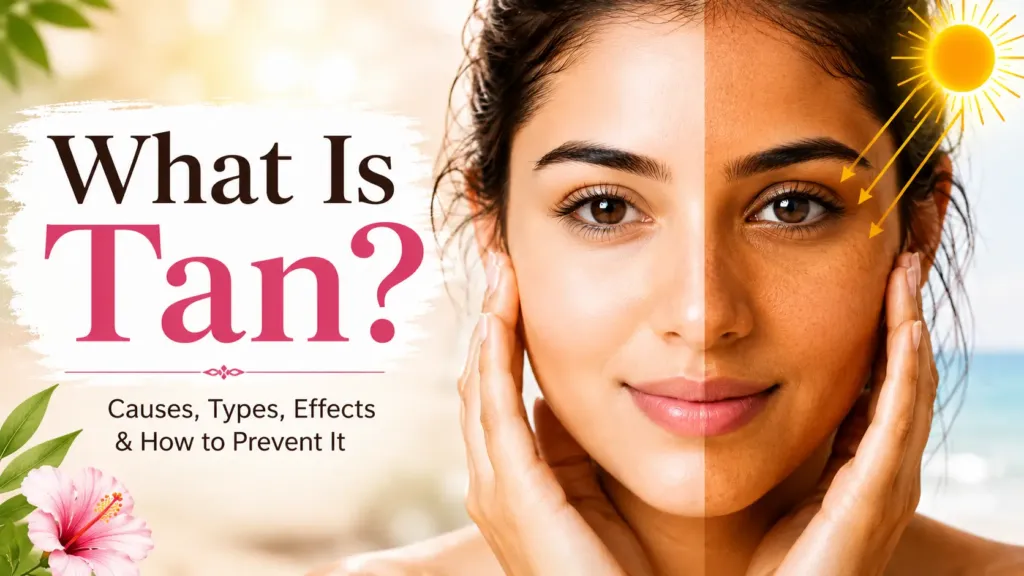
f you’ve ever come back from a beach holiday or a long bike ride with visibly darker skin, you’ve experienced tanning firsthand. But what actually is tan, why does it happen, and does it ever really go away? Let’s break down the science in simple terms.
Table of Contents
What Does “Tan” Actually Mean?
Tan refers to the temporary darkening of skin that happens when it’s exposed to ultraviolet (UV) rays from the sun. It’s your skin’s natural defense mechanism — a way of shielding deeper layers from UV damage. In Hindi, “tan” (धूप की कालिमा) simply describes this sun-induced darkening, and it’s completely different from the trigonometric “tan” you might remember from math class or the Income Tax TAN number used for business registration — despite sharing the same three letters, they have nothing to do with each other.
Why Does Skin Tan in the Sun?
Your skin contains cells called melanocytes, which produce a pigment called melanin. When UV rays hit your skin, melanocytes ramp up melanin production as a protective response — melanin absorbs and scatters UV radiation before it can damage the DNA in your skin cells. This extra melanin is what makes your skin look darker or more “tanned.” The more sun exposure you get, and the longer it continues without protection, the more melanin your skin produces, and the deeper the tan becomes.
Tan vs Sunburn vs Sun Damage
These three terms often get mixed up, but they’re different things. Tan is a protective pigmentation response — it’s brown or bronze and generally painless. Sunburn is actual inflammation and damage to skin cells from UV overexposure — it’s red, hot, and often painful, and it can peel. Sun damage is the cumulative, long-term effect of repeated UV exposure, which can include premature wrinkles, dark spots, and increased skin cancer risk. You can have a tan without a sunburn, but repeated tanning still contributes to long-term sun damage, which is why prevention matters even if your skin doesn’t burn easily.
Who Gets Tanned the Most?
Everyone’s skin produces melanin in response to sun exposure, regardless of their natural skin tone — fair, medium, or deep. However, people with lighter base skin tones tend to show a more visible contrast between tanned and untanned areas, while those with naturally deeper skin tones may tan less noticeably but are still affected. Areas exposed most often — face, hands, neck, and forearms — usually show the most visible tanning since they get the most direct sun.
Does Tan Fade on Its Own?
Yes. Tan is not a permanent change to your skin — it’s tied to the outer layer of skin cells, which naturally shed and renew every 28 to 40 days. As new, less-pigmented skin cells rise to the surface, tan gradually fades on its own. However, if you keep getting sun exposure without protection, new tan keeps forming faster than the old tan can fade, which is why it can feel permanent even though it technically isn’t.
How to Deal With Tan
If you want to speed up the fading process, you have two main levers: gentle exfoliation to remove tanned surface cells faster, and consistent sun protection to stop new tan from forming. From here, you can dive into specific routines — whether that’s removing tan from your face, trying home remedies, or picking the right de-tan product for your skin type. We’ve broken all of that down in separate, detailed guides linked throughout this blog.
Understanding what tan actually is — and that it’s a normal, temporary, protective response rather than “damage” in itself — takes a lot of the anxiety out of dealing with it. With the right routine, fading tan and keeping your natural skin tone even is very achievable.
FAQs
Is tanning permanent?
No. Tan is temporary pigmentation caused by melanin rising to the skin’s surface after sun exposure. It naturally fades in 2-4 weeks as skin cells renew, and de-tan products can speed this up.
What causes tan on the face?
Face tan happens when UVA/UVB rays trigger melanin production to protect deeper skin layers. Prolonged sun exposure without SPF, pollution, and heat all accelerate the darkening.
Does tan go away on its own?
Yes, mild tan usually fades on its own within a few weeks as the skin exfoliates naturally. Deeper or repeated tanning takes longer and benefits from active de-tan treatment.
What is the difference between tan and sunburn?
Tan is a protective pigmentation response, while sunburn is actual skin damage and inflammation from overexposure. Sunburn is red, painful and peels; tan is brown/bronze and painless.
Can dark-skinned people get tan too?
Yes. Everyone produces melanin in response to sun exposure regardless of base skin tone, so tanning and uneven patches can appear on any skin type.
