
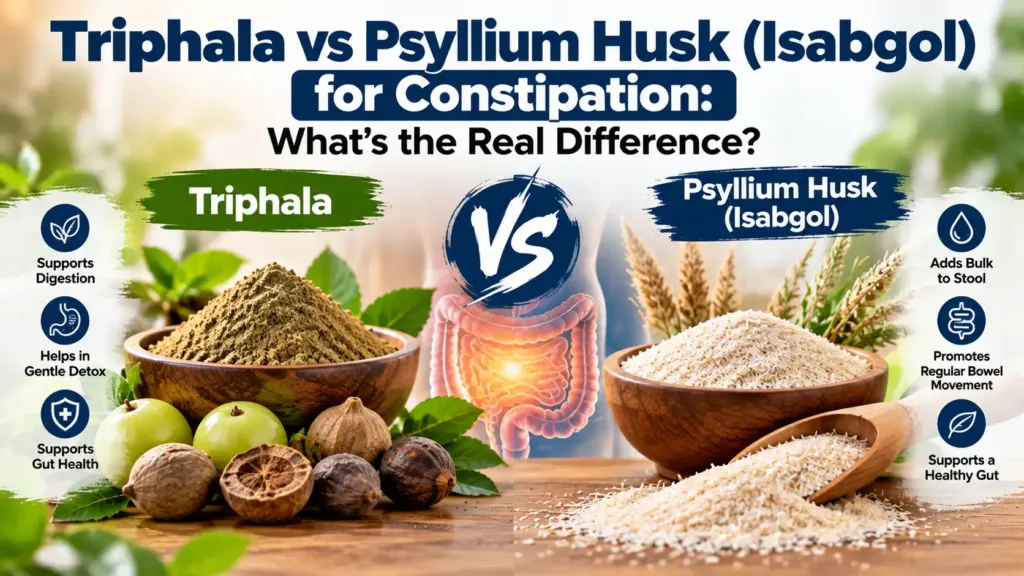
Constipation creates a surprisingly specific shopping question: Triphala or psyllium husk (isabgol)? Both sit on the same shelf and both are linked with regularity, but they are not two brands of the same thing.
The useful answer is not a universal winner. It depends on what you want the ingredient to do, how your body responds, and what else you take. Here is a clear comparison.
Key takeaways
- Psyllium (isabgol) is a soluble fibre that adds bulk; it needs plenty of water.
- Triphala is an Ayurvedic blend of three fruits traditionally used for digestion.
- Take psyllium about 2 hours apart from medicines.
- Pain, blood in stool, weight loss or a sudden bowel change needs a doctor first.
Table of Contents
Quick Comparison Table
| Triphala | Psyllium husk (Isabgol) | |
|---|---|---|
| What it is | Ayurvedic blend of amalaki, bibhitaki and haritaki | Soluble fibre from Plantago ovata seed husk |
| How it is thought to work | Traditionally supports digestion and bowel movement | Absorbs water, forms a gel and adds bulk to stool |
| Common forms | Churna (powder), tablets, capsules | Husk, powder, sachets |
| Onset | Varies by person and dose | Usually 12–72 hours |
| Key precaution | May cause loose stools; not for pregnancy without advice | Must be taken with plenty of water; separate from medicines |
What Triphala Is
Triphala is one of Ayurveda’s best-known formulations, made from three fruits: amalaki (amla), bibhitaki and haritaki. It is commonly used for digestion and bowel regularity, and traditionally taken at night with warm water.
The exact formulation and serving instructions vary between products. For a deeper look, read what Triphala really does for your gut, whether it is safe to take Triphala every day and our guide to Haritaki for digestion, one of its three fruits.
What Psyllium Husk (Isabgol) Is
Psyllium husk comes from the seeds of Plantago ovata, grown widely in India. It is almost pure soluble fibre. When mixed with water, it swells into a gel that adds bulk and softness to stool, which helps it move more easily.
Because it works through fibre and water, isabgol is often a first step for people whose diet is low in fibre.
The Practical Difference
Psyllium is a fibre ingredient; Triphala is an Ayurvedic herbal combination. When choosing, consider:
- Your usual diet: if you eat very little fibre, psyllium directly addresses that gap.
- Your preference: some people prefer a traditional Ayurvedic approach and a small daily dose; others prefer a simple fibre supplement.
- Hydration: psyllium without enough water can worsen bloating or, rarely, cause blockage.
- Your medicines: fibre can affect how some medicines are absorbed.
- How your body responds: start low and observe.
In Ayurveda, sluggish bowels are often linked to weak digestion. If that interests you, our pillar guide on Agni in Ayurveda explains the concept.
How to Take Them Sensibly
Psyllium: mix the labelled dose in a full glass of water or milk, drink immediately, and follow with more water. Start with a smaller dose and increase over a week to limit gas. Take it about 2 hours before or after medicines.
Triphala: follow the product label. It is often taken at bedtime with lukewarm water. Stop if you get significant loose stools or cramps.
Whichever you choose, the basics still matter: fruits, vegetables, whole grains, 2–3 litres of fluid a day (unless restricted) and daily movement. Our tips on improving digestion naturally can help.
Safety Matters
Constipation with any of the following needs medical assessment before you try any product:
- Severe abdominal pain, swelling or vomiting
- Blood in stool or black stools
- Unexplained weight loss
- A sudden, persistent change in bowel habits, especially after age 45
Pregnant or breastfeeding women, children and people with bowel conditions, swallowing difficulty or on regular medication should check with a doctor first.
Turning This Into a Practical Routine
If you prefer Triphala in a ready-to-use format, you can explore Aarogya Jeevanam’s Triphala product details and the wider digestive wellness range. Compare the ingredient details and serving instructions with what you actually need. If constipation is persistent, painful or comes with warning signs, see a doctor before buying anything.
The Takeaway
Psyllium adds fibre; Triphala offers a traditional Ayurvedic approach to digestion. Neither is universally ‘better’. Choose based on your diet, preference, medicines and how your body responds, and keep food, water and movement at the centre.
Frequently Asked Questions
Is Triphala better than psyllium husk?
They work differently. Psyllium adds soluble fibre and bulk, while Triphala is a traditional herbal blend for digestion. Suitability depends on the person and the goal, so neither is universally better.
Can I take Triphala and isabgol together?
Some people do, but it is sensible to start with one, observe your response and speak to a healthcare professional before combining them, especially if you take other medicines.
Can I take psyllium husk every day?
Psyllium is commonly used daily as a fibre supplement. Follow the label, drink enough water and separate it from medicines. Persistent constipation should be evaluated.
Can Triphala cause loose stools?
Yes, it can in some people, especially at higher doses. If significant diarrhoea or abdominal pain occurs, stop and seek advice.
When is constipation a warning sign?
Severe pain, vomiting, blood in stool, unexplained weight loss or a persistent new change in bowel habits needs prompt medical attention.
Related Reads on Aarogya Jeevanam
- Triphala: What It Really Does for Your Gut (and Who Shouldn’t Take It Every Day)
- Is It Safe to Take Triphala Every Day?
- Haritaki (Harad) for Digestion: Ayurvedic Role and What Research Supports
- Agni in Ayurveda: The Digestive Concept That Changes How You Think About Food
- Home Remedies for Acid Reflux and Indigestion
Editorial note: This article is intended for general wellness information. It is not a substitute for individual medical diagnosis or treatment. Please consult a qualified healthcare professional before starting any supplement, especially if you are pregnant, breastfeeding, have a medical condition or take regular medicines.