
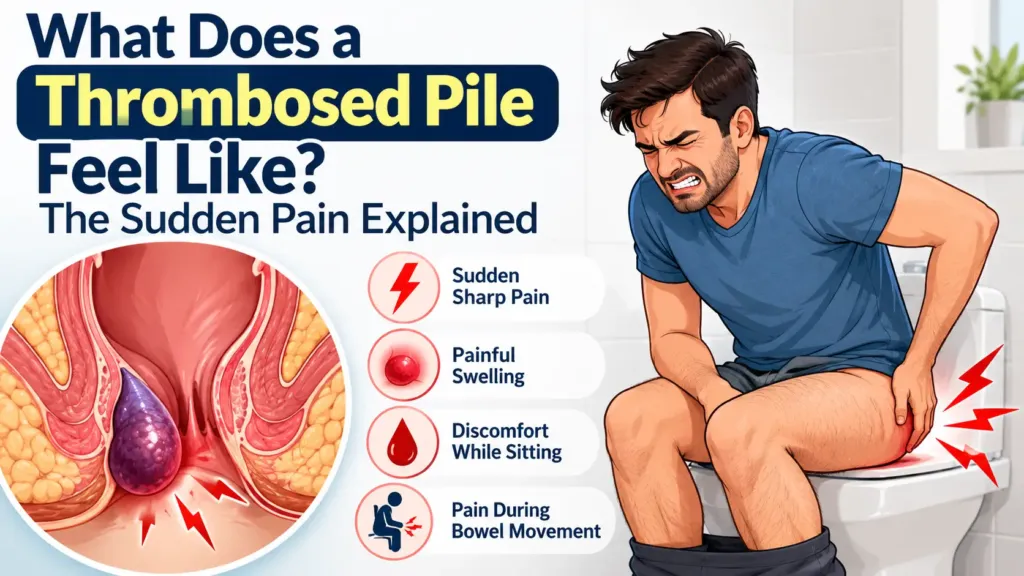
Yesterday you were fine. Today there’s a hard, painful lump near your anus, and sitting feels impossible. If this sounds familiar, you may have a thrombosed pile. It’s one of the most painful forms of piles, but the good news is that it usually gets better, and the worst pain doesn’t last long.
What is a thrombosed pile?
A thrombosed pile is an external pile in which a small blood clot has formed. The clot stretches the sensitive skin around the anus, which is why it hurts so much more than ordinary piles.
What it feels like
- A sudden lump that appears over hours, not weeks
- Hard and firm, like a pea or a grape
- Bluish or purple in colour
- Sharp, throbbing pain, worse while sitting, walking or passing stool
- Sometimes a little bleeding if the skin over the clot breaks
What triggers it
Usually a sudden spike in pressure:
- Heavy straining during constipation
- Lifting something heavy
- A bout of diarrhoea
- Long travel or sitting for hours
- Pregnancy or childbirth
How long does the pain last?
| Time | What usually happens |
|---|---|
| First 48 to 72 hours | Pain is at its worst |
| Days 4 to 7 | Pain eases as the body starts absorbing the clot |
| 2 to 3 weeks | Lump shrinks; a small skin tag may remain |
Home care for relief
- Sitz bath: sit in warm water for 10 to 15 minutes, 2 to 3 times a day. See our sitz bath guide.
- Cold compress: a cold pack wrapped in cloth for 10 minutes can reduce swelling in the first day or two.
- Soft stool: fibre, water and isabgol so you don’t strain.
- Rest lying on your side to take pressure off.
- Pain relief: ask a pharmacist or doctor which pain reliever is safe for you.
Don’t try to pop or squeeze the lump yourself. It can cause infection and heavy bleeding.
When to see a doctor quickly
- Pain is unbearable, especially in the first 72 hours
- The lump keeps growing
- Bleeding is heavy
- You have fever, pus or spreading redness
If you see a surgeon within about 3 days, they may remove the clot through a tiny cut under local anaesthesia. This gives fast relief. After that, the body is already healing, so home care is usually preferred. Read about other options in does every case of piles need an operation?
Will it come back?
It can, if the same habits continue. Long toilet sitting, straining and low fibre are the main causes. The fixes are the same as for all piles: more fibre and water, less time on the toilet, and staying active.
Frequently Asked Questions
How do I know if my pile is thrombosed?
A thrombosed pile appears suddenly as a hard, bluish, very painful lump near the anus. Ordinary piles are softer and usually less painful.
Can a thrombosed pile burst?
Yes, the skin can break and release dark blood. This often eases pain. Keep the area clean and see a doctor if bleeding doesn’t stop.
How long does a thrombosed pile take to heal?
Pain is worst in the first 2 to 3 days, then eases. The lump usually shrinks over 2 to 3 weeks.
Is a thrombosed pile dangerous?
It is painful but not usually dangerous. See a doctor for severe pain, heavy bleeding or signs of infection.
Can I treat a thrombosed pile at home?
Most cases settle with sitz baths, soft stool, rest and pain relief. Very painful cases in the first few days may benefit from a minor procedure.
About the author: Deepak Sagar is an Ayurvedic wellness content writer with Aarogya Jeevanam and over 6 years of experience writing on digestive health and holistic living.
Disclaimer: This article is for general information only and is not a substitute for medical advice. Please consult a qualified doctor for diagnosis and treatment.